







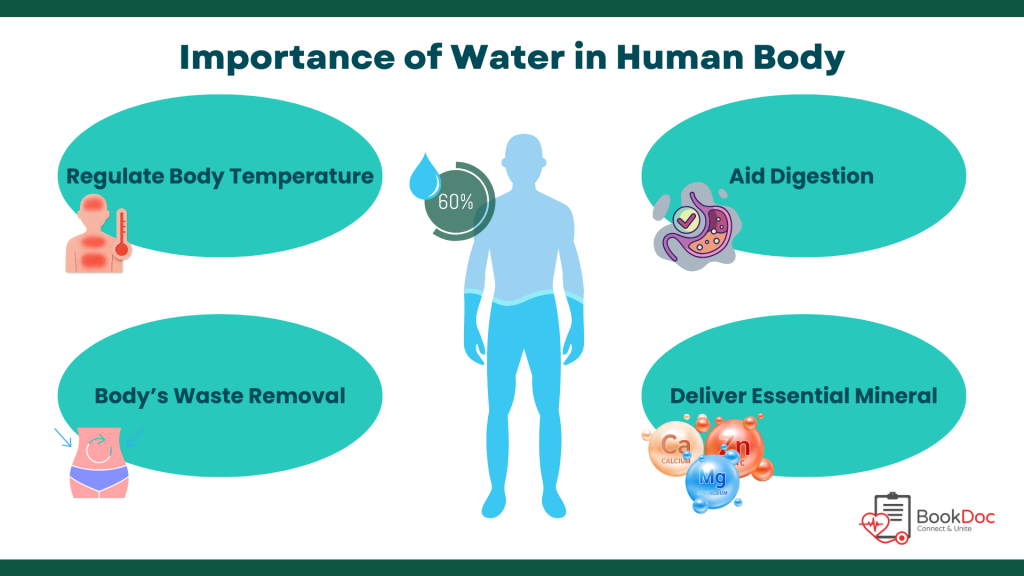
We reach for water countless times a day — after a morning jog, between meetings, or simply to refresh our minds. But water isn’t just about quenching thirst. Making up about 60% of our body, it plays a vital role, as illustrated in the diagram above (1). Yet, with a wide variety on the market today, from sparkling to oxygenated to natural minerals, it’s easy to wonder: which claims are actually true, and which ones are just marketing hype? No worries, we’ve got you covered! We asked a dietitian to answer some common water questions and reveal what’s genuinely best for your health.

Kindly click on the questions to reveal the answer!
No, sparkling water does not dehydrate you. Research shows that it hydrates the body just as effectively as normal water (2). The dissolved carbon dioxide in sparkling water does not interfere with the body’s ability to absorb water. However, be aware that some sparkling waters have added sugars, flavors, or sodium, and these additives can change how hydrating or unhealthy the drink is (3). So, make sure to check the nutritional label!
There is no strong evidence from research supporting the idea that oxygenated water reduces fever. The body absorbs oxygen through the lungs, so boosting oxygen levels by drinking oxygenated water is unlikely. Staying well‑hydrated with regular water is important when you have a fever, but the “extra oxygen” in oxygenated water doesn’t appear to contribute meaningfully to fever reduction. For fever management, proven methods remain antipyretic medications whenever needed and physical cooling measures like tepid water sponging.
According to Harvard Health, even if alkaline water slightly increases blood pH, the kidneys quickly restore balance, showing that the body naturally regulates its pH regardless of what we drink (7). One possible benefit of alkaline water is that it may provide short-term relief from heartburn associated with acid reflux. (7). However, this effect is short-lived, and more effective treatments are available, such as antacids or medications that reduce stomach acid production.
Research study shows the absorption rates of calcium in mineral water can be comparable to other dietary sources (8). It may contribute significantly to daily calcium intake, which may benefit people who don’t consume dairy or have lactose intolerance (9). However, it’s important for us to also get the calcium source from dietary food intake to ensure the recommended dosage per day is met. Therefore, it’s best treated as a complement to a balanced diet or supplement instead of a complete replacement.
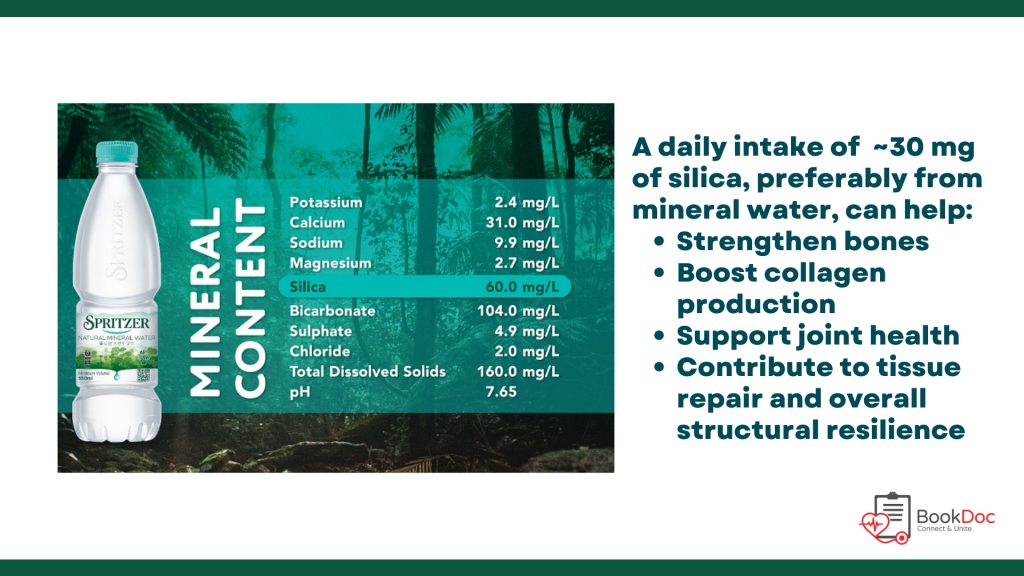
Silica, also known as dietary silicon, is naturally present in mineral water. Research suggests that silicon supports better bone health by stimulating collagen synthesis and enhancing bone mineral density (4). It also contributes to improved skin structure and elasticity by promoting collagen formation and maintaining connective tissue integrity (5). Importantly, mineral water provides a natural and easily accessible source of silica, making it one of the simplest ways for us to support our bones and skin.
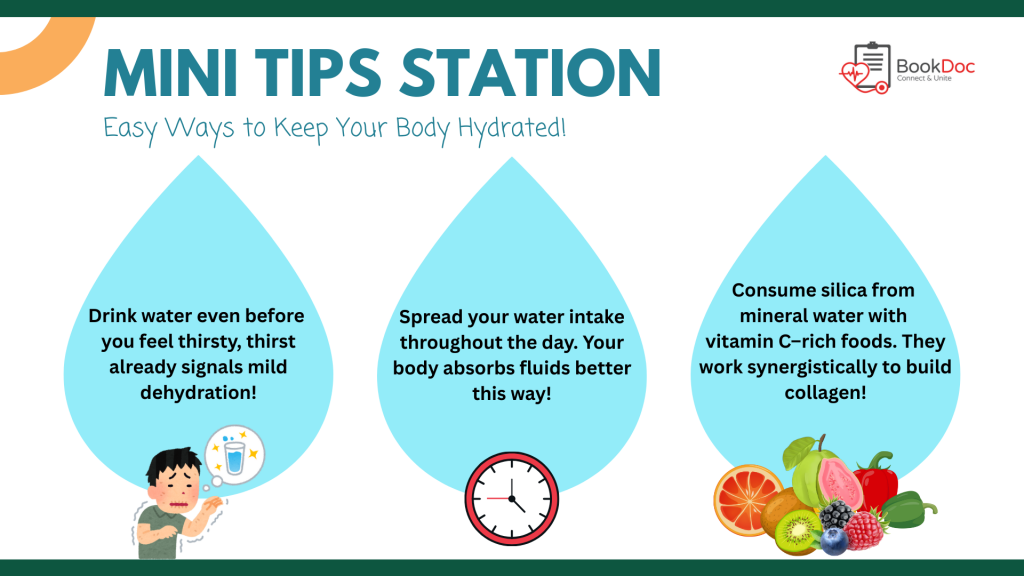
Choosing the right water doesn’t have to be complicated. Natural mineral water, such as Spritzer, stands out as a reliable choice — naturally sourced from protected aquifers in Taiping, Perak, packed with essential minerals, and carefully regulated for purity. By making Spritzer a part of your daily routine, you’re enjoying a hydration option that’s not only refreshing and convenient but also supports overall wellness in a simple, effective way.
References:
- European Food Safety Authority (EFSA). (2010). Scientific opinion on the substantiation of health claims related to water and maintenance of normal physical and cognitive functions. EFSA Journal, 8(10), 1811. https://doi.org/10.2903/j.efsa.2010.1811
- Maughan, R. J., Watson, P., Cordery, P. A., Walsh, N. P., Oliver, S. J., Dolci, A., Rodriguez-Sanchez, N., & Galloway, S. D. (2015). A randomized trial to assess the potential of different beverages to affect hydration status: development of a beverage hydration index. American Journal of Clinical Nutrition, 103(3), 717–723. https://doi.org/10.3945/ajcn.115.114769
- Mba, A. L. B. (2020, April 7). Does sparkling water hydrate you? Healthline. https://www.healthline.com/nutrition/does-sparkling-water-hydrate-you?utm_source=chatgpt.com#recommendation
- Uribe, P., Johansson, A., Jugdaohsingh, R., Powell, J. J., Magnusson, C., Davila, M., Westerlund, A., & Ransjö, M. (2020). Soluble silica stimulates osteogenic differentiation and gap junction communication in human dental follicle cells. Scientific Reports, 10(1). https://doi.org/10.1038/s41598-020-66939-1
- Jurkić, L. M., Cepanec, I., Pavelić, S. K., & Pavelić, K. (2013). Biological and therapeutic effects of ortho-silicic acid and some ortho-silicic acid-releasing compounds: New perspectives for therapy. Nutrition & Metabolism, 10(1). https://doi.org/10.1186/1743-7075-10-2
- Kim, J. E., Lee, J., Kim, H., Kim, J., & Cho, Y. (2009). Effect of vitamin C, silicon and iron on collagen synthesis and Break-Down enzyme expression in the human dermal fibroblast cell (HS27). The Korean Journal of Nutrition, 42(6), 505. https://doi.org/10.4163/kjn.2009.42.6.505
- LeWine, H. E., MD. (2024). Is alkaline water better? Harvard Health. https://www.health.harvard.edu/staying-healthy/is-alkaline-water-better#:~:text=A%20pH%20above%207%20means,this%20would%20only%20be%20temporary.
- Intestinal calcium absorption from mineral water. (1997). PubMed. https://pubmed.ncbi.nlm.nih.gov/9252974/
- Pop, M. S., Cheregi, D. C., Onose, G., Munteanu, C., Popescu, C., Rotariu, M., Turnea, M., Dograru, G., Ionescu, E. V., Oprea, D., Iliescu, M. G., Minea, M., Stanciu, L. E., Silișteanu, S. C., & Oprea, C. (2023). Exploring the Potential Benefits of Natural Calcium-Rich mineral Waters for Health and Wellness: A Systematic review. Nutrients, 15(14), 3126. https://doi.org/10.3390/nu15143126