






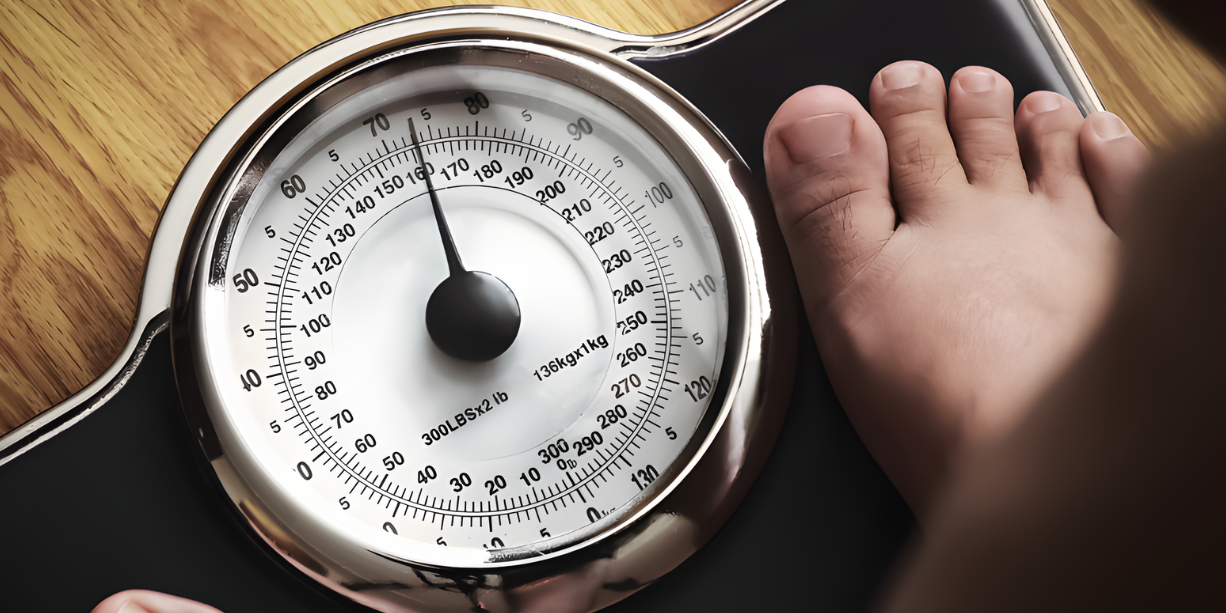
You stuck to the diet.
You swapped from nasi lemak to wholemeal sandwiches, drank fresh fruit juices instead of teh tarik, added granola or oats to your breakfast —just to see that number on the scale go down.
And it did. For a while.
But then… the weight came back.
Maybe even more than before.
This frustrating cycle is called weight rebound or the yo-yo effect. And if you’ve been through it, you know it’s not just about willpower. It’s about how you fuel your body and whether your nutrition plan is built to last.
But why does it happen? And more importantly – how can you stop it from happening again? Let’s break it down.
Why Weight Rebound Happens
1. Falling Back into Old Eating Habits
You’ve been eating healthier, losing weight, and feeling proud of your progress. But then, life gets busy, stress hits, or you just start missing the “comfort foods” of old.
The problem is you don’ learned how much to eat. So instead of learning how to eat well, you looked for easier alternatives — skipping meals, relying on meal replacements, or choosing quick fixes choosing quick fixes instead of balanced plates to “save calories.”
That’s why sustainable weight loss isn’t just about eating less or replacing meals.
It’s about learning portion control, understanding balanced meals, and building habits you can return to — without fear, guilt, or rebound weight gain.
2. Cutting Out Entire Food Groups:
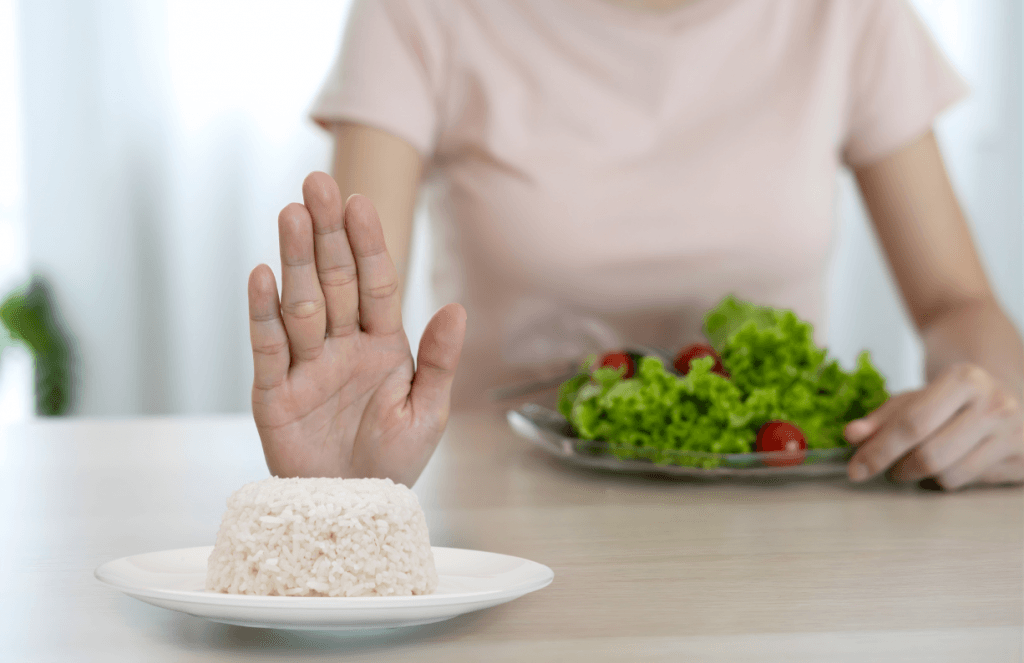
It’s common to think that cutting out an entire food group—like carbs, is the fastest way to lose weight. And yes, you might see quick results at first.
But that often comes with fatigue, brain fog and low energy — because carbs are your brain’s main fuel.
And when carbs are excluded for too long, your body has to find energy elsewhere. That’s when muscle loss, nutrient deficiencies, and poor gut health can happen.
So, when it comes to weight loss, the problem isn’t carbs or any macro or micronutrients.
Your body needs a mix of nutrients from different food groups to function well. Sustainable weight loss isn’t about cutting out food groups — it’s about balance, consistency, and fuelling your body well enough to burn fat and lose weight effectively.
3. Lacking Sustainable Habits
It’s not just about what you eat – it’s also about your lifestyle.
- Not Moving Enough:

You may always hear “move more, calories burn more”, and this is right. Exercise helps you lose fat and keep your muscles. Even walking, dancing, or doing house chores helps! Strength exercises and protein-rich foods are especially food to keep your muscles strong.
Hence, just move more – just some changes as small as walking more often during working hours.
- Poor Sleep & Stress
Not sleeping enough or being constantly stressed can mess with your hormones. You may feel hungrier and store more fat – especially around your belly.
How to Prevent Weight Rebound
1. Portion Control and Consistency
Forget extreme diets that tell you to cut out any food groups, the truth is, your body needs all of them — just in the right balance. Because eating well isn’t about one “perfect meal”,it’s about the habits you repeat every day.
Think about it this way: your plate should look balanced most of the time, whether you’re at home, at the office, or even at a wedding buffet. Balanced portions also support better appetite control.
Meals that include carbohydrates, protein, and healthy fats slow digestion, stabilize blood sugar, and keep you full longer. When you stay full and your energy levels are stable, you’re less likely to snack out of habit, overeat later in the day, or crave food at night.
One food doesn’t cause weight gain on its own. Consistently eating more calories than your body needs do. This is why portion size matters far more than food elimination.
2. Adjust Calorie Intake Gradually
As you lose weight, your body becoming smaller —and that means it burns fewer calories than it used to.
Comparing between the size of two people, a larger body naturally needs more energy to maintain basic functions like breathing, walking, and even sleeping.
Hence, the number of calories that helped you lose weight at the beginning might eventually become too much for your smaller body to maintain that weight.
This is why it’s important to adjust your food intake gradually as you progress—not drastically, but mindfully. Paying attention to your hunger, portion sizes, and overall balance helps prevent weight regain and supports long-term success.
3. Eat Slowly and Mindfully

When you’re starving, it’s easy to eat too fast. But eating slowly helps you know when you’re full and prevents overeating.
Try these tips:
- Don’t skip meals (you’ll be hungrier later!)
- Chew your food properly
- Put away your phones/screens while eating
- Enjoy your food – notice the flavours and texture
Even “healthy” foods can lead to weight gain if eaten in large amounts or in the wrong proportions, consistently eating more than your energy requirements—no matter how “clean” the food is—can still result in a calorie surplus. And over time, excess energy gets stored as fat.
So, portion control still matters—even with healthy meals.
4. Move More, Sit Less

You don’t have to go the gym everyday – just try to:
- Walk after meals
- Stretch during work breaks
- Do activities you enjoy – like dancing, cycling, or swimming
- If you work from home, you may invest on a standing desk
Increase daily movement (NEAT) by staying active at least 30 minutes a day, 5 days a week. Exercise keeps your metabolism up and helps prevent fat from coming back which may help to get sustainable daily calorie deficit.
Bottom Line
Losing weight is just the first step. Keeping it off means building habits you can stick with for life.
It’s not about being perfect – it’s about being consistent. Move more, eat well, get enough sleep, and don’t be too hard on yourself.
How Diet Your Way Can Help
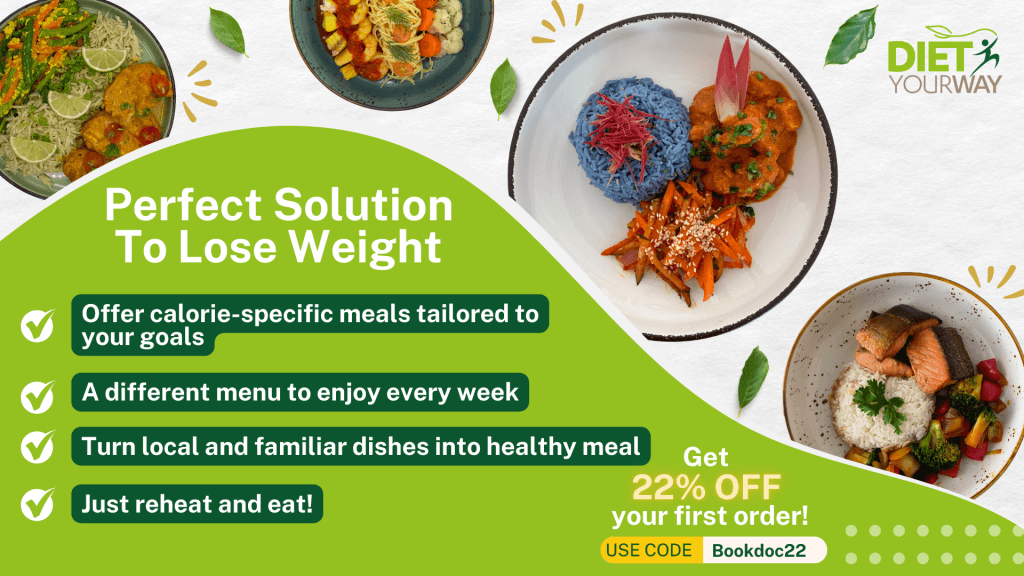
At Diet Your Way, we provide personalised meal plans designed for long-term success—not just short-term results. Our plans are:
- High in fibre and protein to keep you full and satisfied
- Tailored to your energy needs and lifestyle
- Balanced to support your lifestyle and health goals
With our meal plans, you’ll learn to build healthy habits that last, making sustainable health not just a goal, but a way of life. Let us help you—because healthy eating shouldn’t be complicated, it should be easy, delicious, and personalized for you.
References
1. Airina, N., & Mohamad, J. (2012). Fatty acids composition of selected malaysian fishes (komposisi asid lemak ikan terpilih malaysia). Sains Malaysiana, 41(1), 81–94. https://www.ukm.my/jsm/pdf_files/SM-PDF-41-1-2012/10%20Nur%20Airina.pdf
2. Busetto, L., Bettini, S., Makaronidis, J., Roberts, C. A., Halford, J. C. G., & Batterham, R. L. (2021). Mechanisms of weight regain. European Journal of Internal Medicine, 93, 3–7. https://doi.org/10.1016/j.ejim.2021.01.002
3. Cava, E., Yeat, N. C., & Mittendorfer, B. (2017). Preserving Healthy Muscle during Weight Loss. Advances in Nutrition: An International Review Journal, 8(3), 511–519. https://doi.org/10.3945/an.116.014506
4. Holesh, J. E., Martin, A., & Aslam, S. (2023, May 12). Physiology, Carbohydrates. National Library of Medicine; StatPearls Publishing. https://www.ncbi.nlm.nih.gov/books/NBK459280/
5. Ministry of Health Malaysia. (2017). Recommended nutrient intakes for Malaysia. https://hq.moh.gov.my/nutrition/wp-content/uploads/2023/12/FA-Buku-RNI.pdf
6. Neseliler, S., Hu, W., Larcher, K., Zacchia, M., Dadar, M., Scala, S. G., Lamarche, M., Zeighami, Y., Stotland, S. C., Larocque, M., Marliss, E. B., & Dagher, A. (2019). Neurocognitive and Hormonal Correlates of Voluntary Weight Loss in Humans. Cell Metabolism, 29(1), 39–49. https://doi.org/10.1016/j.cmet.2018.09.024
7. van der Valk, E. S., Savas, M., & van Rossum, E. F. C. (2018). Stress and obesity: Are there more susceptible individuals? Current Obesity Reports, 7(2), 193–203. https://doi.org/10.1007/s13679-018-0306-y
8. Zhao, X., Xiang, X., Huang, J., Ma, Y., Sun, J., & Zhu, D. (2021). Studying the Evaluation Model of the Nutritional Quality of Edible Vegetable Oil Based on Dietary Nutrient Reference Intake. ACS Omega, 6(10), 6691–6698. https://doi.org/10.1021/acsomega.0c05544