







For many Malaysians trying to lose weight, nasi often feels like the first thing that has to go.
Rice is avoided.
Bread is cut out.
Most of us love nasi. It’s comfort, culture, and part of daily life. But some fear of it when weight loss is the goal. What if the problem isn’t rice itself — but how it’s prepared?
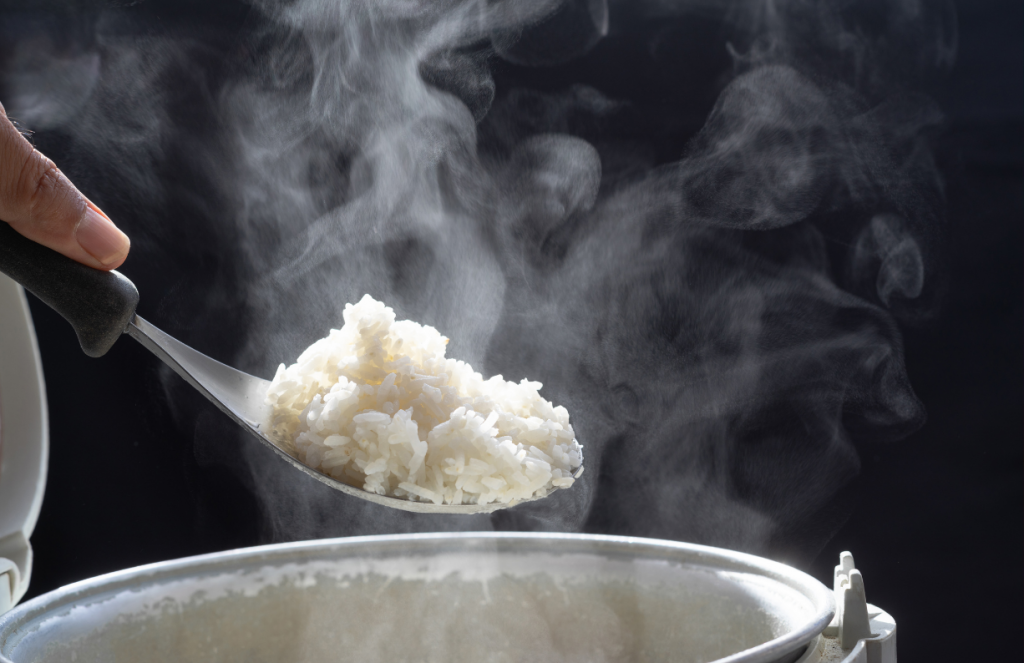
Here’s the surprising part: with a simple tweak in preparation, carbs can work with your metabolism, not against it. When rice is cooked, then cooled and reheated later, part of its starch turns into resistant starch. This type of carbohydrate behaves more like fibre, helping to keep blood sugar stable, digests slowly, and support weight loss.
The real solution is not to avoid carbs — but to choose the right kind of carbohydrates and how you prepare it.
So you don’t have to give up carbs to lose weight, you can work with it — enjoying your favourite meals and that’s where sustainable weight loss really begins.
Understanding Resistant Starch and How It Works in the Body
Resistant starch is a type of carbohydrate that behaves very differently from sugar or refined starch.
Most carbohydrates break down quickly into glucose, which enters the bloodstream and raises blood sugar. This triggers insulin, a hormone that helps store energy — but also encourages fat storage when it rises too often.
Resistant starch does not follow this pathway.
Instead of being fully digested in the small intestine, resistant starch passes into the large intestine, where it becomes food for beneficial gut bacteria. These bacteria ferment it and produce compounds called short-chain fatty acids, which improve insulin sensitivity and metabolic health.
This means resistant starch:
• Raises blood sugar more slowly
• Keeps insulin lower
• Supports better energy balance
In practical terms, it allows your body to use carbohydrates as fuel, not fat.
How Resistant Starch Helps Control Weight and Cravings
One of the biggest challenges in weight loss is controlling insulin and hunger.
Resistant starch helps with both. It stimulates appetite-regulating hormones such as GLP-1 and PYY, which signal fullness to the brain.

This means:
- You feel satisfied faster
- You stay full longer
- You naturally eat less at the next meal
It also improves insulin sensitivity, making it easier for your body to burn fat which leads to more calories spent.
Even more interestingly, resistant starch provides fewer absorbed calories than regular starch because it is not fully digested — yet it keeps you full for longer. This makes staying in a calorie deficit much easier without feeling deprived.
This is why diets that include resistant starch tend to be:
• More sustainable
• Easier to follow
• More effective for long-term fat loss
So… Where Can You Find Resistant Starch?
The good news is that resistant starch is already part of traditional Malaysian eating — especially when food is prepared the right way.
Some excellent local sources include:
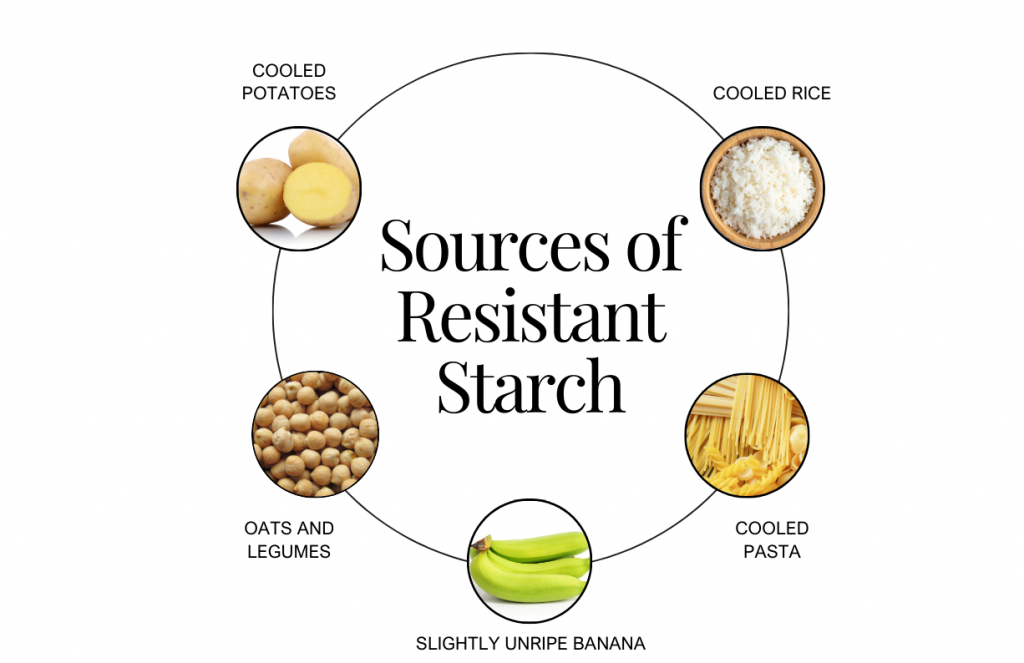
🍚 Cooked and cooled rice
Cook your rice and then let it cooled at least 12 hours in fridge and reheat it
🌱 Dhal, lentils, chickpeas, nuts, oats and tempeh
These are naturally rich in resistant starch and fibre.
🍠 Cooked and cooled sweet potatoes, pasta, noodles
🍌 Green or slightly unripe bananas (pisang muda)
Here are some simple ways to start:
1. Cook an extra batch of rice or potatoes, cool them overnight, and use them the next day in meals.
2. Swap white bread for lentil soup or a handful of chickpeas in your salad or nasi ulam.
3. Add a green banana (pisang that is not fully ripened) to your morning smoothie or have it with your peanut butter toast.
4. Mix in sweet potatoes or legumes into your lunch — for example, masak lemak kacang, sayur lodeh with tempeh, or even curry lentils with chapati.
You don’t need to overhaul your whole diet—just sneak in resistant starch a little at a time. This allows you to enjoy familiar foods — without triggering the blood sugar crashes that lead to cravings.
Final Thought
When it comes to improving your metabolism and managing your weight, the goal isn’t to fear carbohydrates but cooking them smarter.
When chosen and prepared the right way, carbs like resistant starch can support stable blood sugar, reduce cravings, and make fat loss more sustainable.
This means you don’t have to give up rice, lentils, or the traditional foods you grew up with. You just need to eat them in a way that works with your body, not against it.
Diet Your Way’s Approach: Where Resistant Starch Meets Real Life
At Diet Your Way, it’s not just about calories — it’s about smart carbohydrates choices and how we prepare it.
Our meals are carefully prepared and stored to make healthy eating easy:
- Balance of protein, fiber, and carbs, including sources of resistant starch like cooled sweet potatoes, pasta, legumes, and rice.
- Chilled and frozen for resistant starch: Rice, potatoes, and other carb ingredients are cooled and stored in the freezer which naturally converts part of their starch into resistant starch.
- Simple storage at home: Just keep in the fridge or freezer until ready to eat, allowing the resistant starch to develop while keeping the food fresh.
By understanding how your body responds to different types of carbs—like resistant starch—you can make smarter, more satisfying choices that help you feel better, eat better, and reach your goals.
Because healthy eating should feel practical, satisfying, and sustainable — not stressful.
🎉 Get 22% OFF your first order with code: Bookdoc22 at Diet Your Way
👉 Let’s make weight loss simple, sustainable, and satisfying
References:
- Bindels, L. B., Segura Munoz, R. R., Gomes-Neto, J. C., Mutemberezi, V., Martínez, I., Salazar, N., Cody, E. A., Quintero-Villegas, M. I., Kittana, H., de los Reyes-Gavilán, C. G., Schmaltz, R. J., Muccioli, G. G., Walter, J., & Ramer-Tait, A. E. (2017). Resistant starch can improve insulin sensitivity independently of the gut microbiota. Microbiome, 5(1). https://doi.org/10.1186/s40168-017-0230-5
- Wang, Y., Chen, J., Song, Y.-H., Zhao, R., Xia, L., Chen, Y., Cui, Y.-P., Rao, Z.-Y., Zhou, Y., Zhuang, W., & Wu, X.-T. (2019). Effects of the resistant starch on glucose, insulin, insulin resistance, and lipid parameters in overweight or obese adults: a systematic review and meta-analysis. Nutrition & Diabetes, 9(1). https://doi.org/10.1038/s41387-019-0086-9