







World Cancer Day 2026 carries the theme “United by Unique, “ where every cancer journey is personal, but we’re all part of the same fight against the disease. Since everyone’s risk and needs differ, understanding your own health is a key step toward better outcomes for yourself and the community.
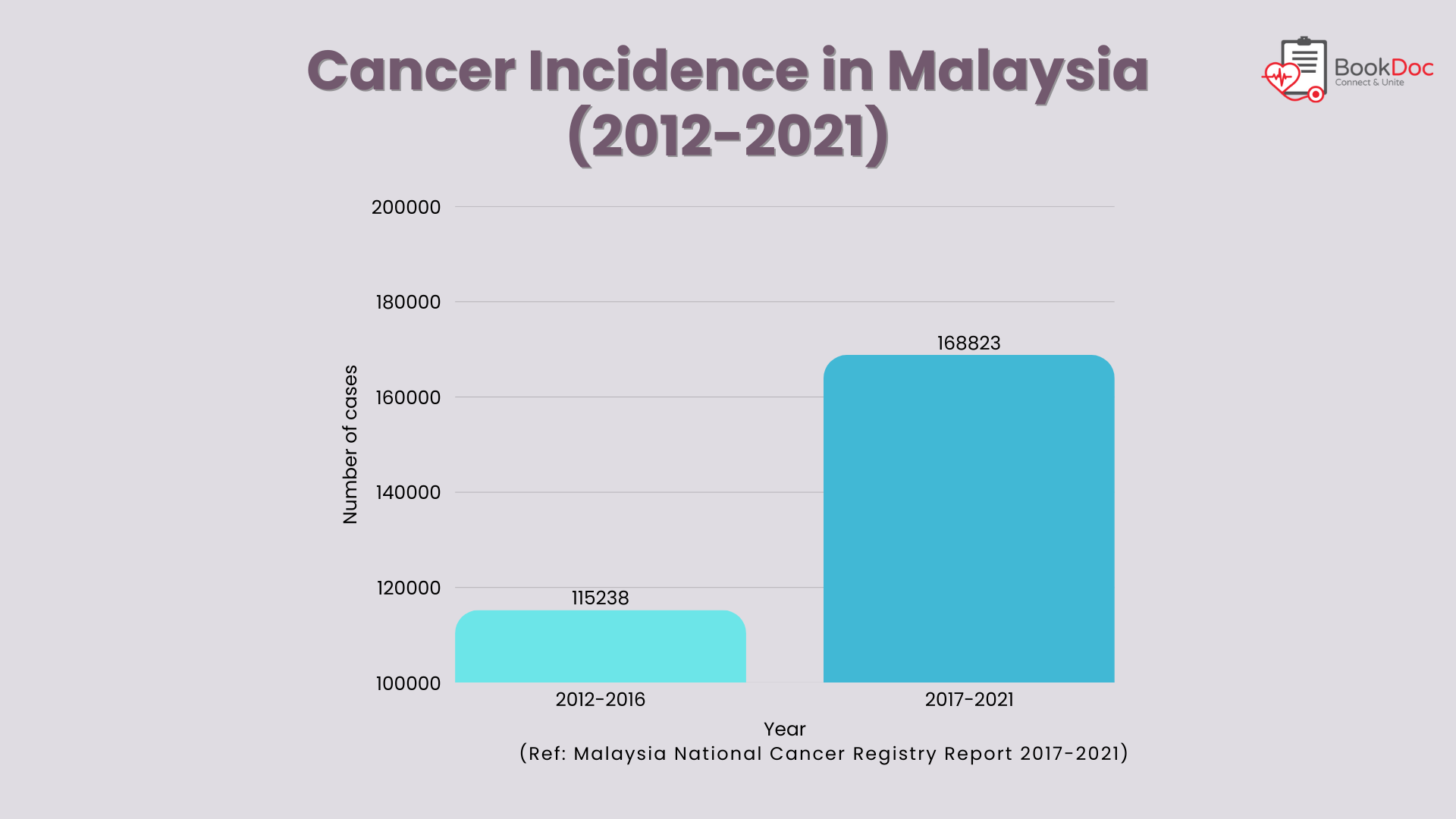
Cancer cases in Malaysia have been rising steadily. This trend underscores the importance of early detection through regular health checks. While many people are familiar with general health checks, cancer screening is an essential next step that is often overlooked. It can save lives by detecting problems early, allowing for timely treatment and helping people make informed decisions about their health.
Feeling Well Is a Good Sign, But Screening Still Matters
Many people associate cancer with pain, drastic weight loss, or severe symptoms, but early-stage cancer often causes no obvious signs. Feeling healthy may give a false sense of security, which is why some people only seek screening once symptoms appear. This delay contributes to late diagnosis, which remains a major barrier in Malaysia. According to the National Cancer Registry Report 2017- 2021, more than 40 % of cancer cases are diagnosed at stage III or IV, when treatment can be more complex, and survival rates are lower.
Not only that, but it has also shown that barriers to screening go beyond fear: many people report low awareness of screening tests, lack of perceived personal risk, misconceptions about procedures, and emotional responses such as embarrassment or fatalistic beliefs (1). Additionally, busy schedules, family commitments, and uncertainty about costs or eligibility further delay participation.
Early detection remains vital to improving survival rates and treatment outcomes. With timely screenings, many lives could be saved, and the burden of cancer in Malaysia could be significantly reduced.
Common Cancers Where Screening Makes a Difference
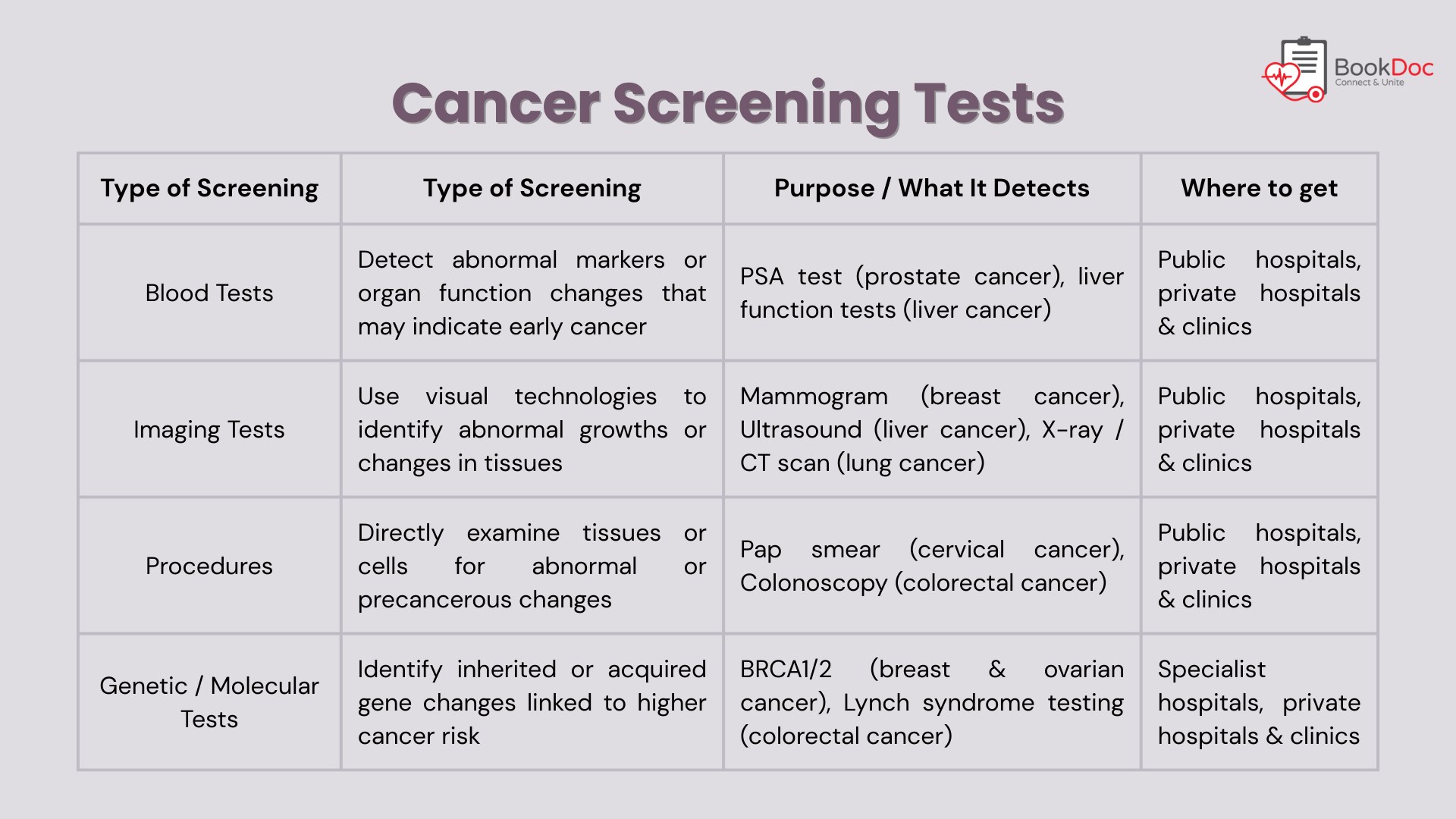
Screening is a proactive step in prevention and early detection, and it works best when paired with regular health check-ups. The common cancers where screening makes a difference include:
- Breast cancer
Regular mammograms and breast awareness help detect changes early. - Cervical cancer
Pap smears and HPV testing are effective preventive tools for women. - Colorectal (colon) cancer
Stool tests or colonoscopy can identify issues before symptoms arise.
- Lung cancer (for high-risk individuals)
Screening can benefit long-term smokers or those with specific risk factors. - Prostate cancer
Recommended for men over 50, with frequency based on risk and the doctor’s advice. - Liver cancer
Screening is recommended for individuals with hepatitis or liver disease.
Screening recommendations differ by age, family history, and lifestyle, so it is always best to consult a healthcare professional.
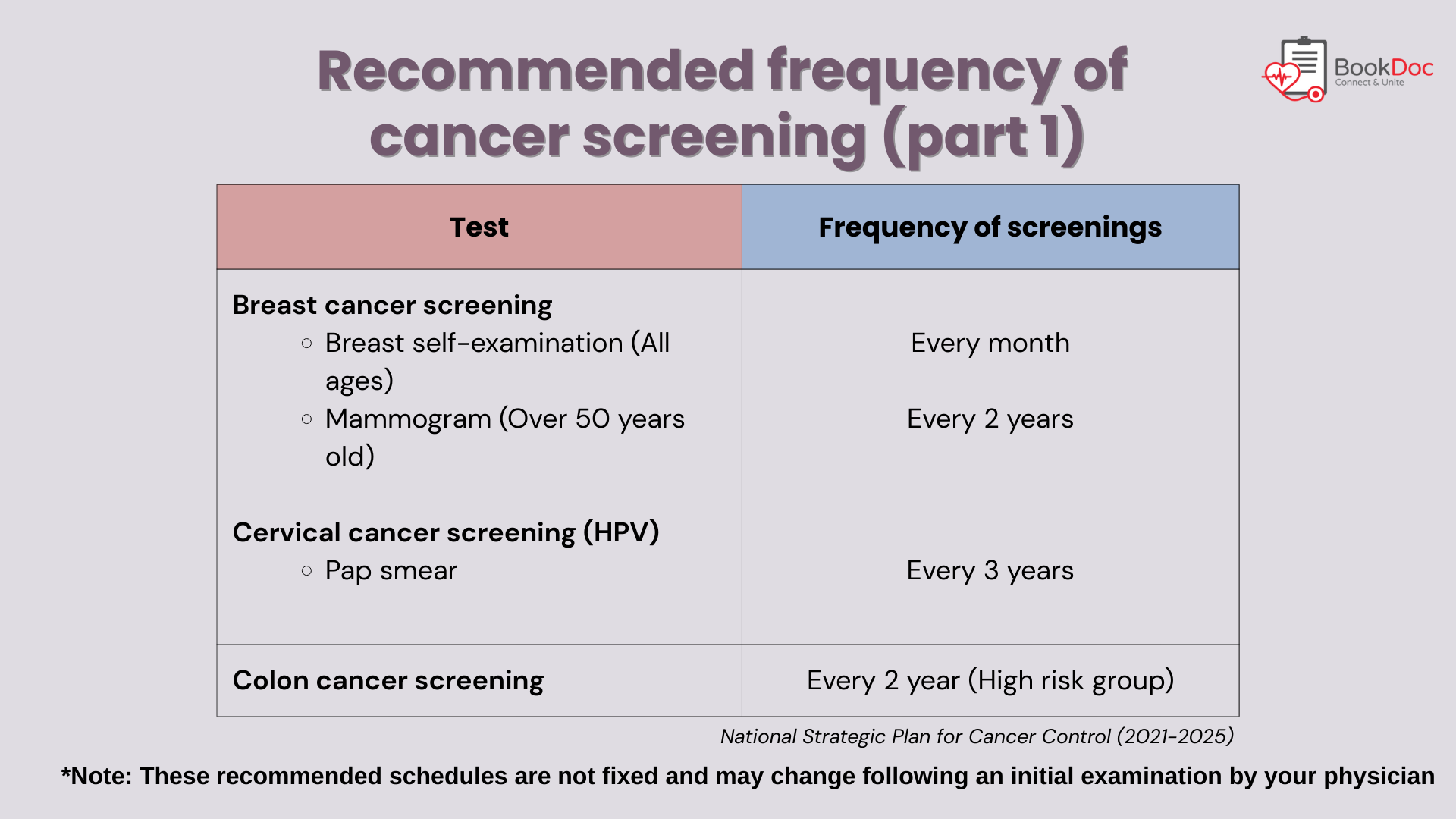
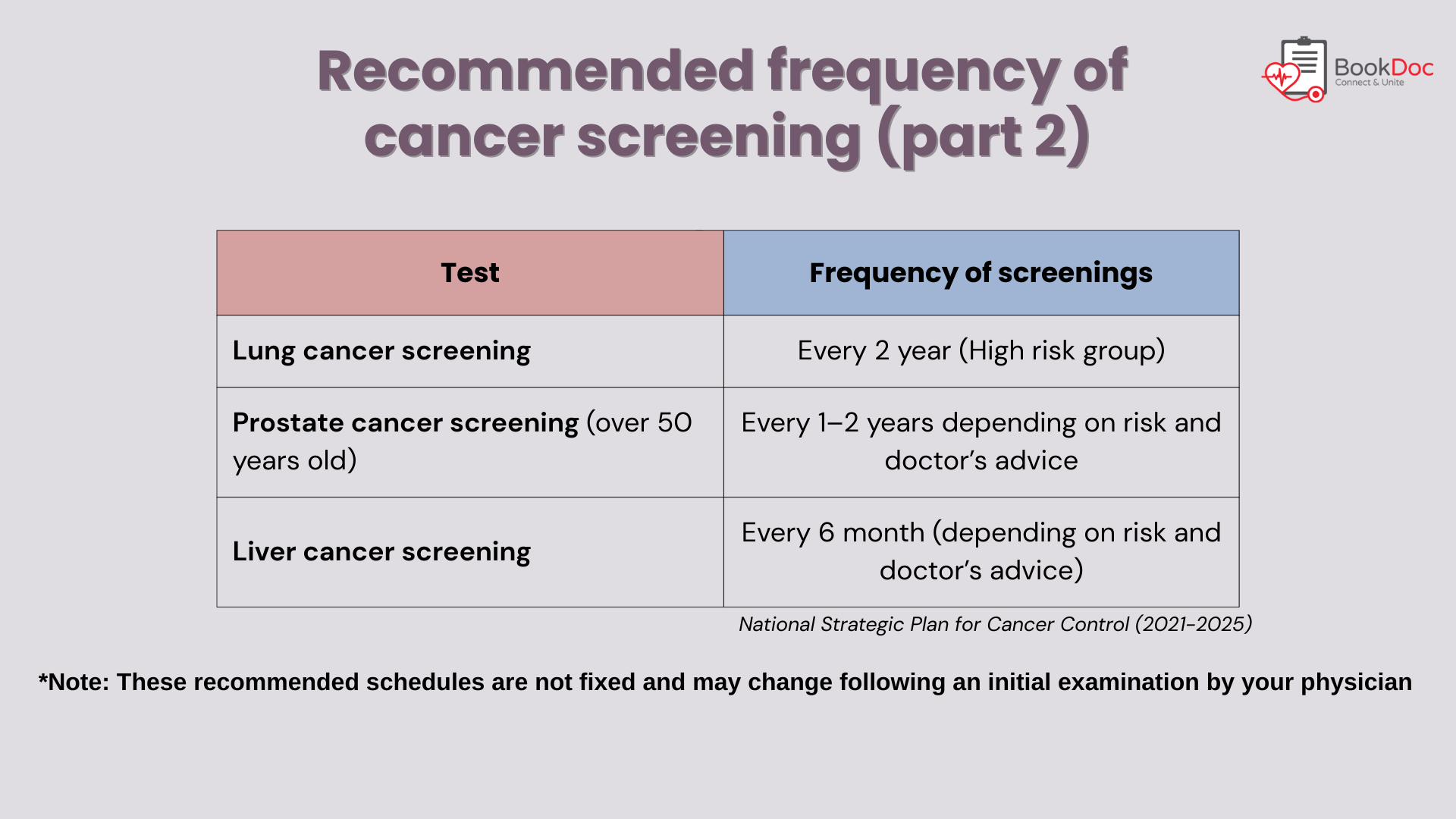
Let’s take a closer look at what is included in cancer screening tests.
Screening Is About Taking Control, Not Living in Fear
An important message to remember:
An abnormal screening result does not automatically mean cancer.
Often, it simply means further checks are needed. Screening opens the door to information, guidance, and timely care, which allows people to make informed decisions about their health.
Taking the step to screen is a simple yet powerful act of self-care. It reflects responsibility for your wellbeing, care for your loved ones, and confidence in making informed choices about your body. This World Cancer Day 2026, remember that each step from scheduling a check-up to understanding your personal risk contributes to the fight against cancer. Early action improves outcomes and strengthens our shared efforts. Screening is about knowledge, empowerment, and hope, not fear.