









The start of the new year often comes with quiet pressure. We may tell ourselves: “This is the year I’m going to do things right,” only to feel discouraged when we struggle to follow through with our plans or resolutions. For many of us, these frustrations can be demotivating, and before we know it, we are back to square one.
What if this year didn’t require perfection at all? Instead of chasing flawless routines, what if we focused on small, steady progress and self-compassion? Let this time be a gentle invitation to revisit our intentions, reconnect with our values, and refocus our energy on what matters most.
Why Traditional Resolutions Often Fail
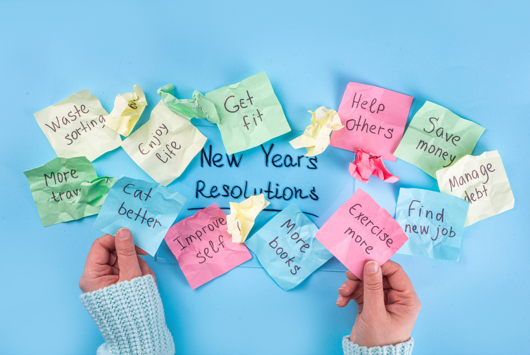
Many of us start the year with ambitious goals, only to lose track or feel discouraged by February. Resolutions often fail when we try to change too much too quickly, focus on “shoulds” instead of our personal why, or lack support and accountability when motivation dips. Sustainable change isn’t about willpower – it’s about starting small, connecting to your why, and leaning on support. Recognizing this helps us approach the New Year with kindness, flexibility, and steady progress.
What does a Kind, Intentional Approach Look Like?
A kind, intentional start to the New Year shifts focus from rigid goals to progress and small wins. It emphasizes showing up consistently, celebrating milestones both big and small, staying compassionate when setbacks happen, and learning to try again when things don’t go as planned.
Here are a few simple steps to softly refresh your focus and mindset for the New Year:
Step 1: Reflect on the Past Year
Take a moment to reflect on how far you’ve come. Think about the expectations, plans, and goals you set last year. Celebrate what you achieved and acknowledge that it’s okay if you didn’t accomplish everything. The act of showing up and trying is what matters most.
Consider reflecting on these questions:
- What were some highlights from the past year that I am proud of?
- What habits or mindset can I leave behind?
- What do I want to carry forward?
Step 2: Set Intentions Aligned with Your Values
An intention is like a personal guide for how you want to think, feel, or act each day. Unlike rigid goals or resolutions, intentions are flexible and help your mind and body stay aligned.
- Example of an intention:
“I intend to notice when my body needs rest and give it a break.”
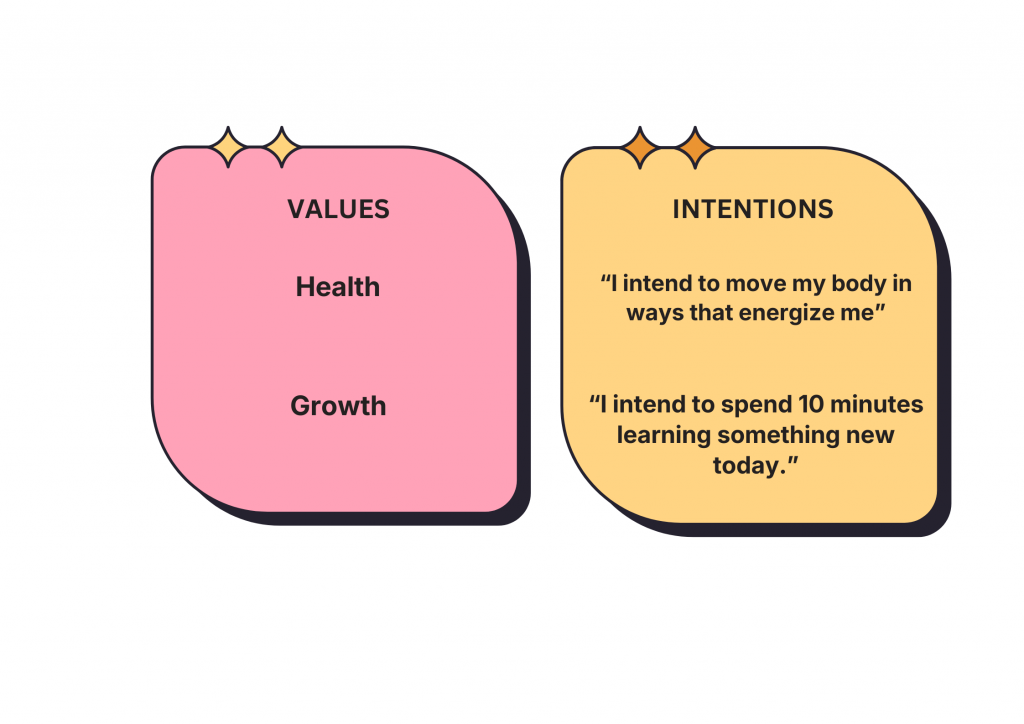
Your values are the principles that guide your behavior, decisions, and priorities, such as health, growth, connection, or balance. Setting intentions aligned with your values means choosing a focus or action that matches what truly matters to you.
- Example of Values and Aligned Intentions:
Step 3: Turn Your Intentions into Small Actions
Once you have a clear intention, think about tiny, practical actions that help bring it to life. They don’t need to be big or perfect: small, consistent steps are what make habits stick. The goal is to make it easy to practice each day and gradually build momentum.
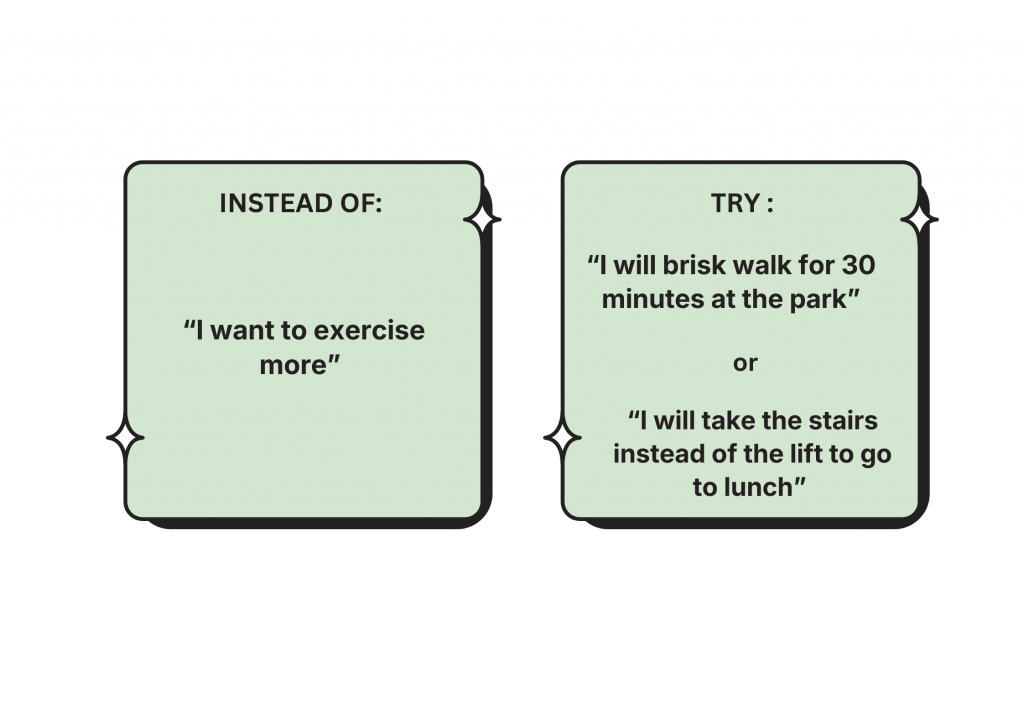
Breaking your intention into small actions also helps you celebrate progress along the way, even if it’s just a few minutes of effort each day. Over time, these tiny steps add up, creating lasting change without pressure or overwhelm.
Step 4: Practice Self-Compassion
Even with the best intentions, it’s normal to feel discouraged when things don’t go as planned. This is where self-compassion comes in.
Self-compassion means being kind and supportive to yourself when life feels hard or when you make mistakes. Treat yourself like a good friend who is going through a tough time.
For example:
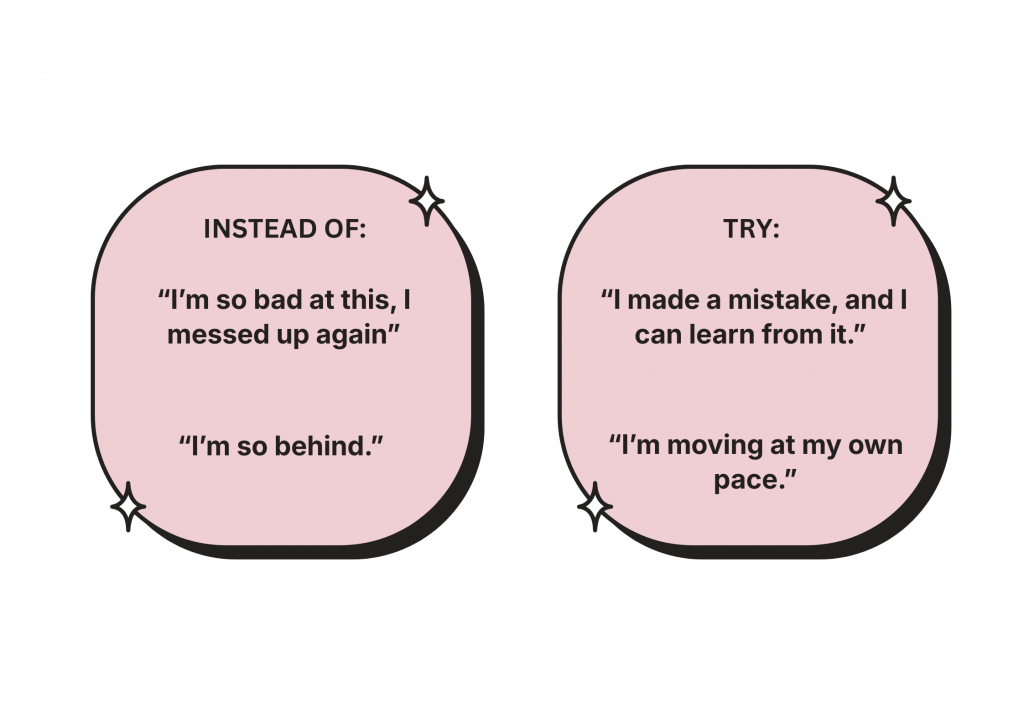
Sometimes, we are our own harshest critics. Let’s shift to being our biggest cheerleader in times of highs and lows, replacing self-criticism with supportive words and affirmations.
Step 5: Notice Your Progress and Lean on Your Support Network
As your habits become more familiar, take a moment to check in with yourself and celebrate the progress you’ve made. If some areas feel challenging, it’s okay to adjust your approach and try again. You can also reach out to friends or find an accountability buddy for support and encouragement – having someone to lean on can make the journey feel lighter and more manageable.

This New Year isn’t about perfection: it’s about making small, steady progress and celebrating the wins along the way. Every step forward no matter how small, is meaningful, and each moment offers a chance to reconnect with what truly matters. May this year be a journey of patience, kindness, and mindful growth – where you honour your intentions, embrace your progress and show yourself the same compassion you offer to others.
References:
- Finch, J. (2023, December 27). The Effectiveness of New Year’s Resolutions: A Psychological Perspective. Clinical Psychology. https://ccp.net.au/the-effectiveness-of-new-years-resolutions-a-psychological-perspective/
- Neff, K. D. (2023). Self-Compassion: Theory, Method, Research, and Intervention. Annual Review of Psychology, 74(1), 193–218. https://doi.org/10.1146/annurev-psych-032420-031047
- Oyserman, D. (2015, December). Values, Psychology of. ResearchGate. https://www.researchgate.net/publication/304194581_Values_Psychology_of
- Oscarsson, M., Carlbring, P., Andersson, G., & Rozental, A. (2020). A large-scale experiment on New Year’s resolutions: Approach-oriented goals are more successful than avoidance-oriented goals. PLOS ONE, 15(12), e0234097. https://doi.org/10.1371/journal.pone.0234097
- Sheldon, K. M., & Elliot, A. J. (1999). Goal striving, need satisfaction, and longitudinal well-being: The self-concordance model. Journal of Personality and Social Psychology, 76(3), 482–497. https://doi.org/10.1037/0022-3514.76.3.482