






Asthma is a significant public health concern in Malaysia, affecting both children and adults. According to the National Health and Morbidity Survey 2023, nearly half a million children aged 6 to 17 years in Malaysia have asthma, with approximately one in two experiencing at least one asthma attack in the past year [1]. Among adults, over 1.4 million Malaysians have asthma, yet 30% of these individuals remain undiagnosed [1]. These figures highlight the widespread prevalence and underdiagnosis of asthma, emphasizing the importance of effective management and public health awareness.
The Battle Inside Your Airways
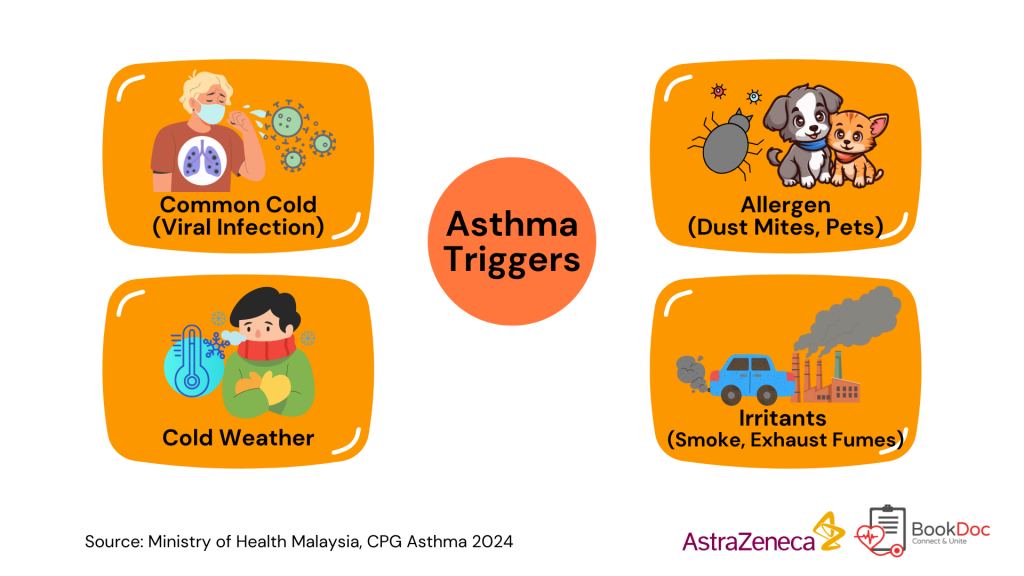
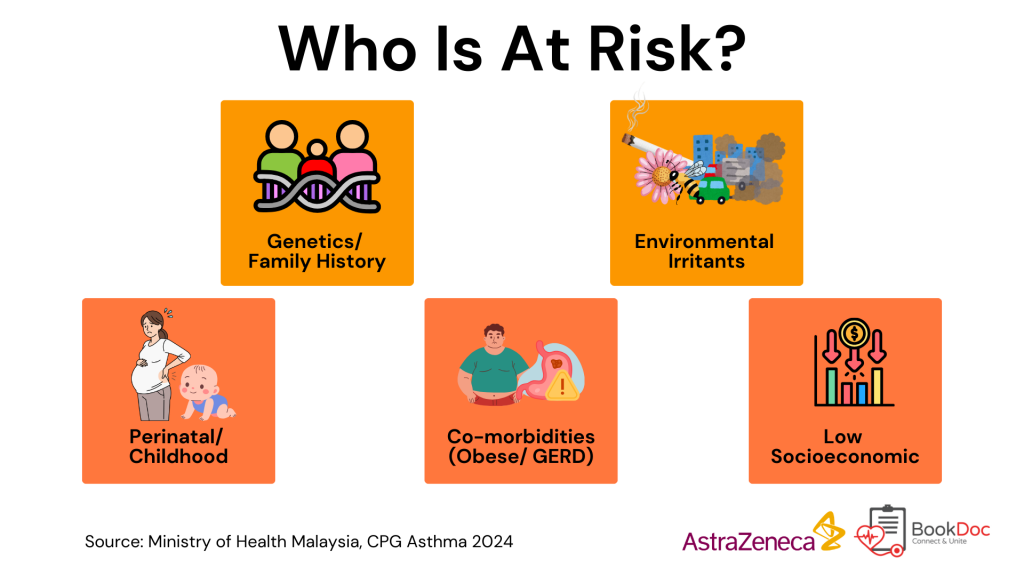
Asthma is a chronic inflammatory lung disease marked by airway narrowing and hyperreactivity, causing episodic symptoms such as shortness of breath that can vary in severity [2]. When exposed to triggers such as allergens, pollution, or viral infections, the immune system overreacts, causing the airways to become inflamed and narrowed. This reaction is triggered by certain cells in the body that release chemicals, such as histamine, which can make breathing difficult.
In addition, the inflamed airways produce excess mucus and swell, further obstructing airflow. In chronic or severe cases, repeated inflammation can lead to structural changes known as airway remodelling, including thickened airway walls and increased mucus-producing cells, which may result in long-term breathing difficulties, such as persistent shortness of breath, wheezing, coughing, chest tightness, or reduced exercise capacity [2].
Steps to Identify Asthma Accurately
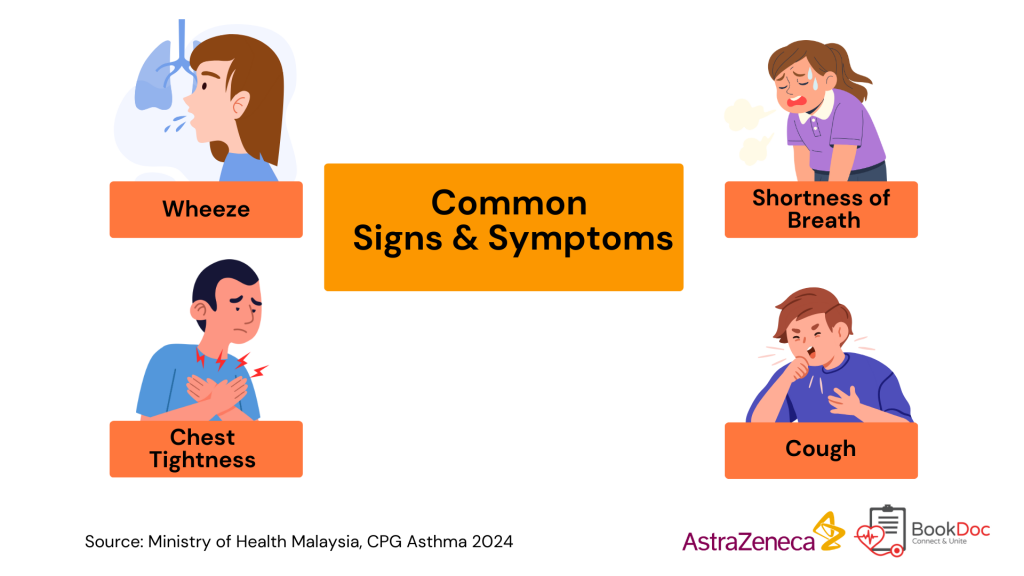
The diagnosis of asthma requires a combination of clinical assessment and objective tests, as no single investigation is sufficient on its own [2]. The e-CPG Management of Asthma in Adults highlights characteristic symptoms such as episodic wheezing, breathlessness, chest tightness and cough. These symptoms are often triggered by allergens, exercise or occur at night, which should raise clinical suspicion.
Physical examination may appear normal when the patient is not experiencing any symptoms. However, during an attack, findings such as tachypnoea (rapid breathing), prolonged expiration (breathing out for an extended period), rhonchi (snoring-like or rattling lung sounds), or reduced air entry may be present.
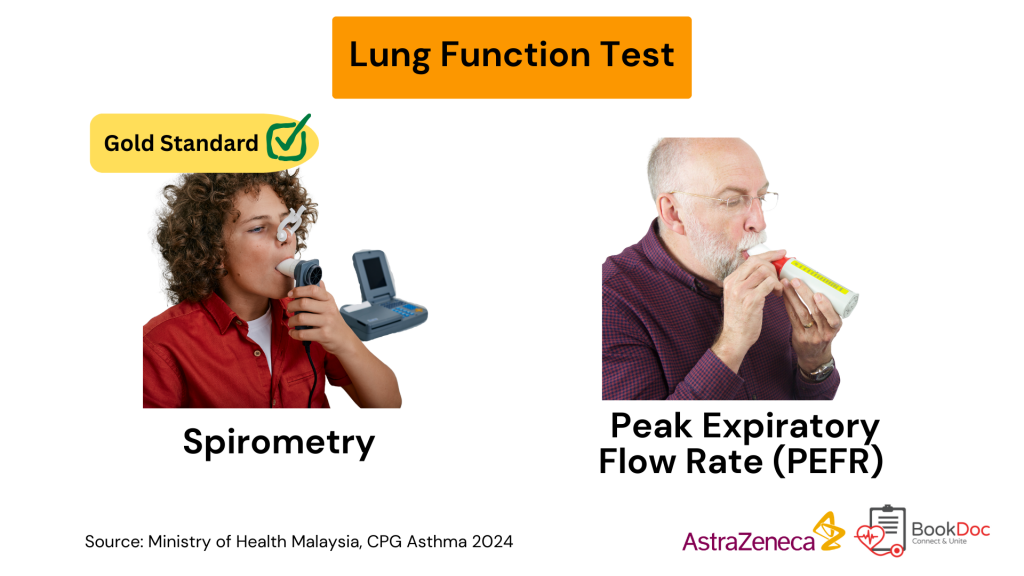
Confirmatory evidence should be obtained through a breathing test called spirometry. This test measures how much air you can breathe out and how fast it leaves your lungs. People with asthma often have a temporary blockage in their airways, which shows up as lower readings on this test. After using a bronchodilator (a medication that opens the airways), improvement in the readings helps confirm the diagnosis.
If spirometry isn’t available, doctors can use a simpler test called peak expiratory flow rate (PEFR), which tracks how fast you can blow out air over time. Large changes in these readings can also suggest asthma, though spirometry is the more accurate method, as it doesn’t just measure the speed you blow out air, it also measures how much air you can exhale and how quickly you can push it out in the first second, which provides a wider picture of your lung function [2].
When to Seek Emergency Help: Recognising Red Flags Early
Asthma symptoms can escalate quickly, and knowing when to seek urgent care can save lives. While mild to moderate flare-ups may improve with your usual inhaler, certain warning signs indicate that the lungs are struggling, and immediate medical attention is needed.
Red Flag Symptoms
Seek urgent medical care if you or your loved one experiences:
- Difficulty speaking in full sentences due to breathlessness
- Rapid worsening of symptoms despite using a reliever inhaler
- Chest tightness that feels severe or increasing
- Bluish lips or fingertips (a sign of low oxygen)
- Confusion, agitation, or extreme fatigue
All patients whose condition continues to worsen despite initial treatment, as well as those experiencing severe or life-threatening asthma, should be admitted to the hospital. Other factors that may warrant admission include [2]:
- Older adults
- Use of more than eight short-acting bronchodilator (SABA) inhaler puffs in the previous 24 hours
- History of severe exacerbations (e.g. prior intubations or asthma-related hospital admissions)
- History of unscheduled clinic or emergency visits requiring oral corticosteroids (OCS)
- Living alone or being socially isolated
- Mental health condition
- Physical disabilities (e.g.mobility impairments or neuromuscular disorders)
Basic Overview of How Asthma Is Treated
Asthma treatment focuses on reducing airway inflammation, preventing symptoms, and managing flare-ups [2]. The main approaches include:
- Reliever and controller medications:
Reliever inhalers are used during sudden symptoms, while controller medications are taken daily to prevent attacks. - Inhalers as the primary treatment method:
Most asthma medicines are delivered through inhalers because they bring the medication directly to the lungs. - Nebulizers for severe episodes:
Nebulizers are usually reserved for asthma attacks or severe symptoms, especially in clinical settings. - Lifestyle and self-management strategies:
Avoiding triggers, knowing proper inhaler technique, and following an action plan helps keep asthma under control.
💡 Take control: Using your inhaler correctly, avoiding triggers, and following an asthma action plan can help reduce attacks and make breathing easier.
👉 Want to learn more about managing asthma and preventing attacks? Find out more here: [https://mysihatpal.com.my/breathe-better/asthma-management#main-section]
Asthma can be well controlled with the right treatment plan and regular follow-up, but recognising warning signs is just as important. When in doubt, always prioritise safety and seek medical help early, as quick action during a severe attack can prevent complications and save lives. To learn more about living well with asthma, including treatment options, prevention strategies, and improving quality of life, stay tuned for Part 2.
Written by Dietitian Evonne
REFERENCES
- Institute for Public Health. (2024). National Health and Morbidity Survey (NHMS) 2023: Non‑communicable Diseases and Healthcare Demand: Technical Report. Ministry of Health Malaysia. https://iku.nih.gov.my/images/nhms2023/key-findings-nhms-2023.pdf
- Ministry of Health Malaysia; Malaysian Health Technology Assessment Section. (2024). Management of Asthma in Adults (Second Edition). https://www.moh.gov.my/moh/resources/Penerbitan/CPG/Respiratory/e‑CPG_Management_of_Asthma_in_Adults_%28Second_Edition%29_-_11_4_25.pdf
Approval code: MY-18936_Jan2026