






Food is something we enjoy every day—but have you ever stopped to think about how our food choices and eating habits affect the environment? Choosing more sustainable foods, such as plant-forward meals, is one important step, just like we have discussed in the previous article (can click here to read: Healthy Planet, Healthy Plate: Our Food Choices Shape Earth’s Future – BookDoc), but what happens during and after our meals matters too. From plastic packaging to uneaten leftovers, our daily eating habits quietly contribute to environmental issues more than we realise.
In this article, we explore eco-friendly eating habits and how small, consistent actions in how we eat and handle food can meaningfully reduce environmental harm.
Why should we care about our eating habits?
It’s easy to think, “It’s just one meal—how bad can it be?” But when multiplied across millions of people daily, the environmental impact —through food waste, packaging, and resource use—becomes significant. Here’s how everyday eating habits contribute to environmental stress:
(1) Food Waste
According to SWCorp, Malaysia generates approximately 17,000 tonnes of food waste daily, with around 24% (about 4,080 tonnes) still being edible. When food is thrown away, it doesn’t simply disappear. In landfills, it decomposes without enough oxygen and produces methane gas, a potent greenhouse gas that contributes to climate change. This means leftover food or uneaten meals are not just wasted money—they also represent wasted water, energy, and resources used to grow, process, and prepare them, ultimately contributing to environmental burdens such as landfill emissions and resource depletion.
(2) Single-use plastics
Cups, straws, containers, and wrappers are often used for just a few minutes during a meal, but they can take decades or even centuries to fully break down. This means that something used for convenience in a single moment can leave a long-lasting environmental footprint well beyond the meal itself.
(3) Environmental pollution
When these plastics are not properly managed, they can end up in rivers and oceans, where they harm marine life and disrupt ecosystems. Animals such as turtles, fish, and seabirds may mistake plastic for food, leading to injury, starvation, or death. Over time, larger plastic items break down into microplastics, which spread through water systems and can enter the food chain—potentially affecting both wildlife and human health.
(4) Resource-heavy food choices
Some food choices tend to have a higher environmental impact due to the resources required in their production and processing. For example, animal-based products like beef and highly processed or heavily packaged foods generally require more water, energy, and materials compared to plant-based or minimally processed options.
This means that even small shifts in our daily choices—such as choosing more plant-based meals or less packaged foods—can help reduce overall environmental pressure.
So… what are eco-friendly eating habits really about?
Eco-friendly food habits focus on simple daily actions that we, as end users, can practice to reduce environmental impact. These simple habits may seem small on their own, but they actually help us understand why our daily eating patterns matter for the environment.
Eco-friendly food habits you can start today
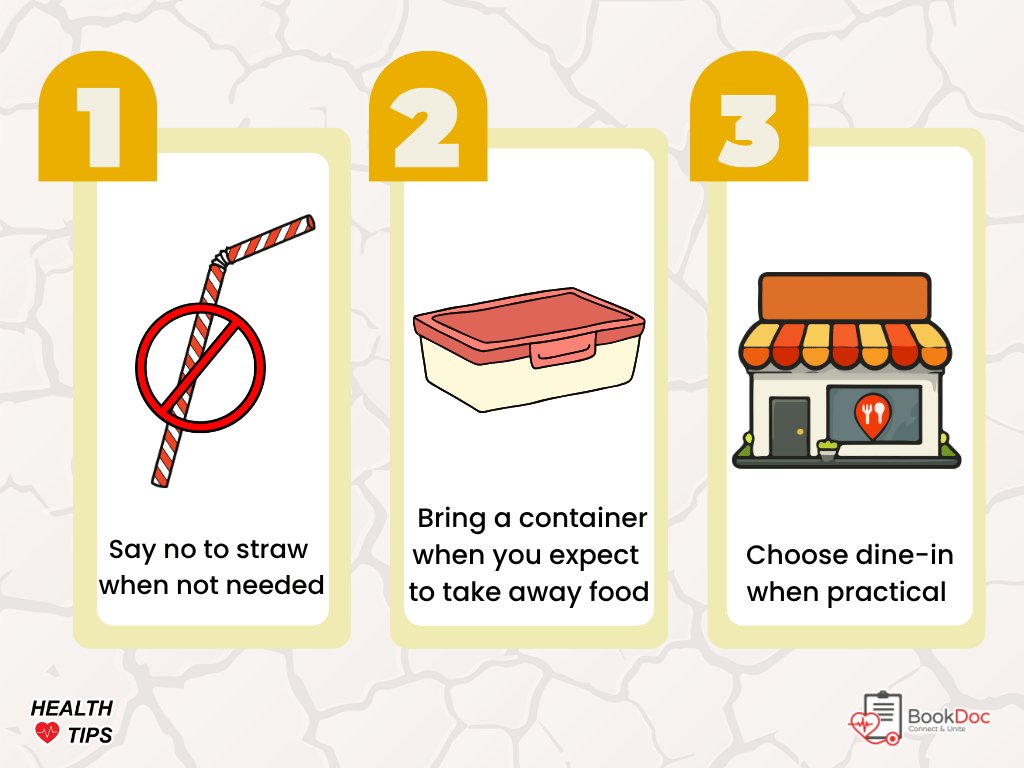
- Bring your own container or tumbler
Bringing your own reusable cup or container helps reduce reliance on single-use plastics, which one study from the European Environment Agency (2021) has shown that it can significantly lower environmental impact compared to disposable alternatives. So, here are some ways that you can do:
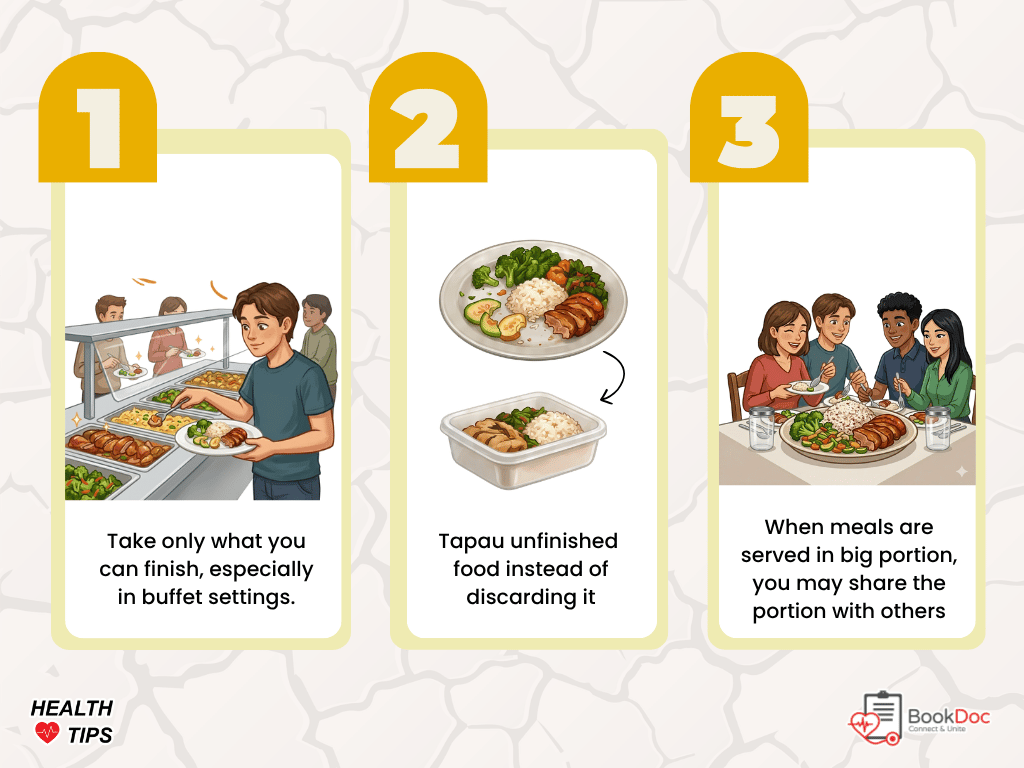
- Reduce food waste
Once again, reducing food waste is important. Remember, food that is thrown away doesn’t just become waste—it continues to impact the environment all the way to the landfill, contributing to resource loss and emissions. Here are some tips you can follow:
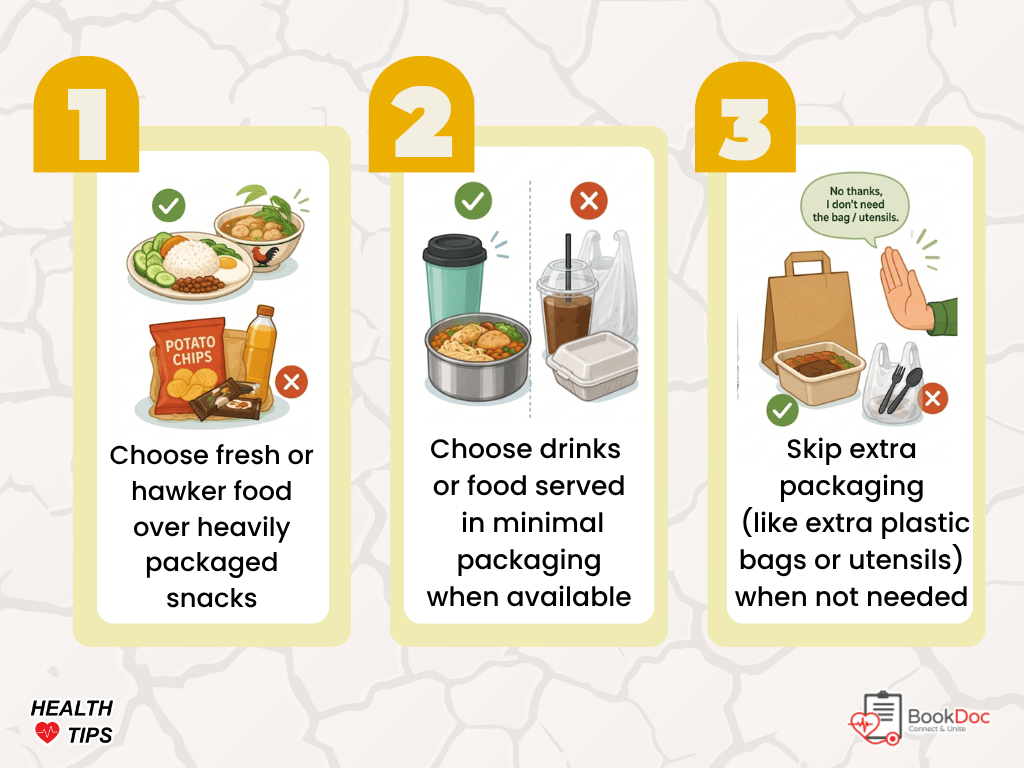
- Choose less packaging-heavy foods
Heavily packaged foods often come with multiple layers of plastic, wrappers, and containers that are discarded immediately after use, contributing to unnecessary waste. In contrast, fresher and less processed options generally require less packaging and reduce the amount of waste generated before the food even reaches your plate.
So, here are some habits that you can try to practice whenever convenient:
Conclusion
Eco-friendly eating starts with awareness and grows through small, consistent actions. If each of us makes a few mindful changes, the collective impact becomes meaningful over time. A simple question to keep in mind:
“Is there a more eco-friendly way I can do this?”