








How to Make Smarter Chocolate Choices
Imagine standing in the chocolate aisle. Dark chocolate, milk chocolate, white chocolate, sugar-free, Belgian, premium, 85% cocoa…the choices seem endless.
With so many options available, it’s easy to assume that all chocolate is the same. But the truth is, not all chocolate is created equal. While chocolate can absolutely be part of a healthy lifestyle, knowing what to look for can help you make a smarter choice.
This World Chocolate Day, let’s celebrate by learning how to choose chocolate wisely.
Why Does the Type of Chocolate Matter?
Chocolate is made from cocoa beans, but not all chocolate contains the same amount of cocoa.
Generally, the higher the cocoa content, such as in dark chocolate, the more flavonoids (natural antioxidants) it contains. These beneficial plant compounds may support heart health, brain function, and help protect the body against oxidative stress.
On the other hand, chocolates with less cocoa, such as white chocolate, are often higher in added sugar and milk solids, which means they provide fewer of cocoa’s natural benefits.
Dark, Milk or White: What’s the Difference?
Now that we know why cocoa content matters, let’s compare dark, milk, and white chocolate to see how they differ nutritionally.
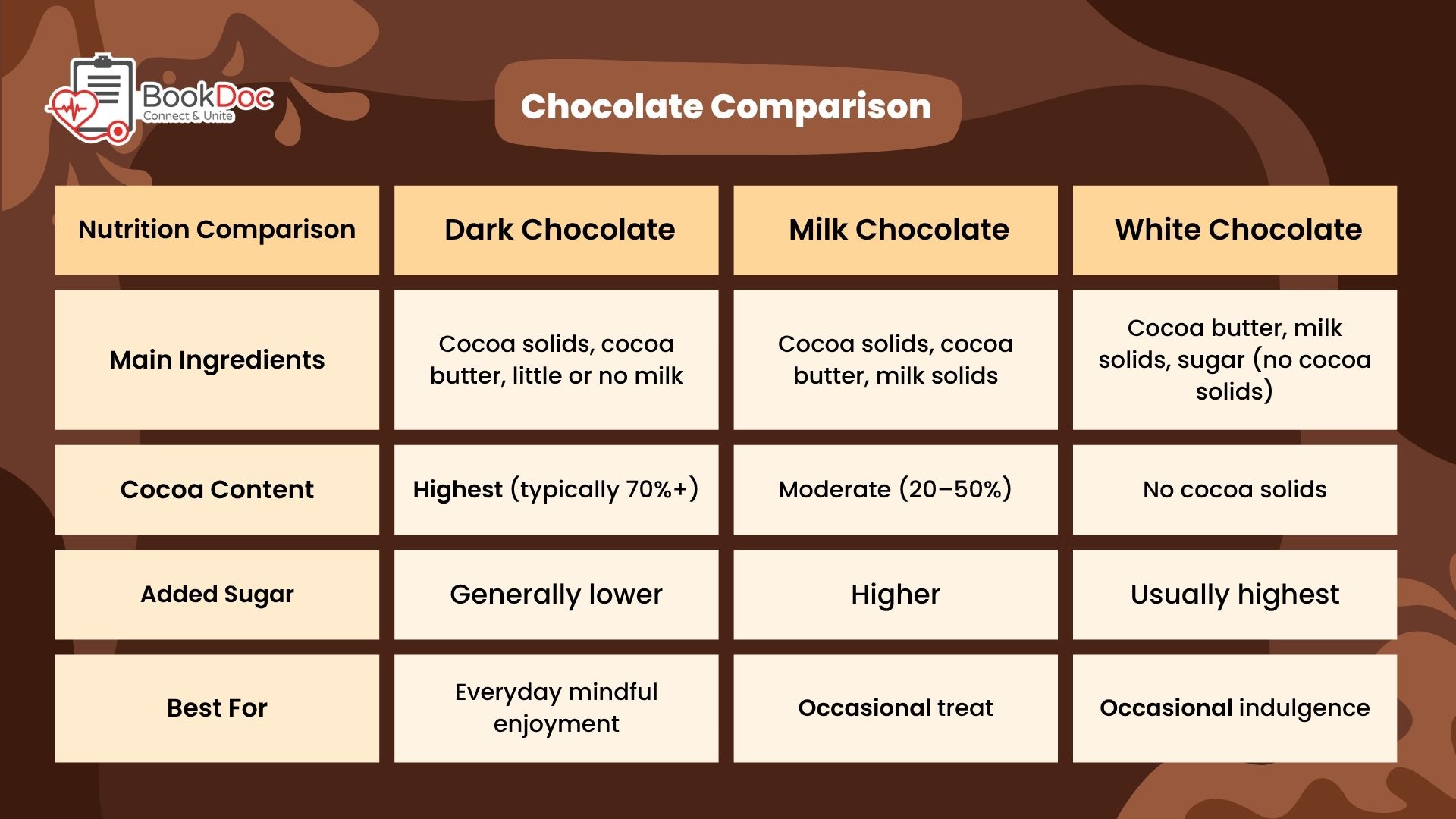
Whether you prefer dark, milk, or white chocolate, the key is to choose wisely and enjoy it in moderation. If possible, opt for dark chocolate (70% cocoa or higher) more often to reap more of cocoa’s natural benefits.
Can You Spot the Better Choice?
Knowing the differences between dark, milk, and white chocolate is a great start. But when you’re shopping, how can you tell which chocolate is the better choice? Since most chocolate is sold in packaged form, the nutrition label is one of the best tools to guide your decision. Compare products using the nutrition information per 100g rather than per serving, as serving sizes can vary between brands.
Now, let’s put this into practice. Which of these two chocolate bars would you choose?
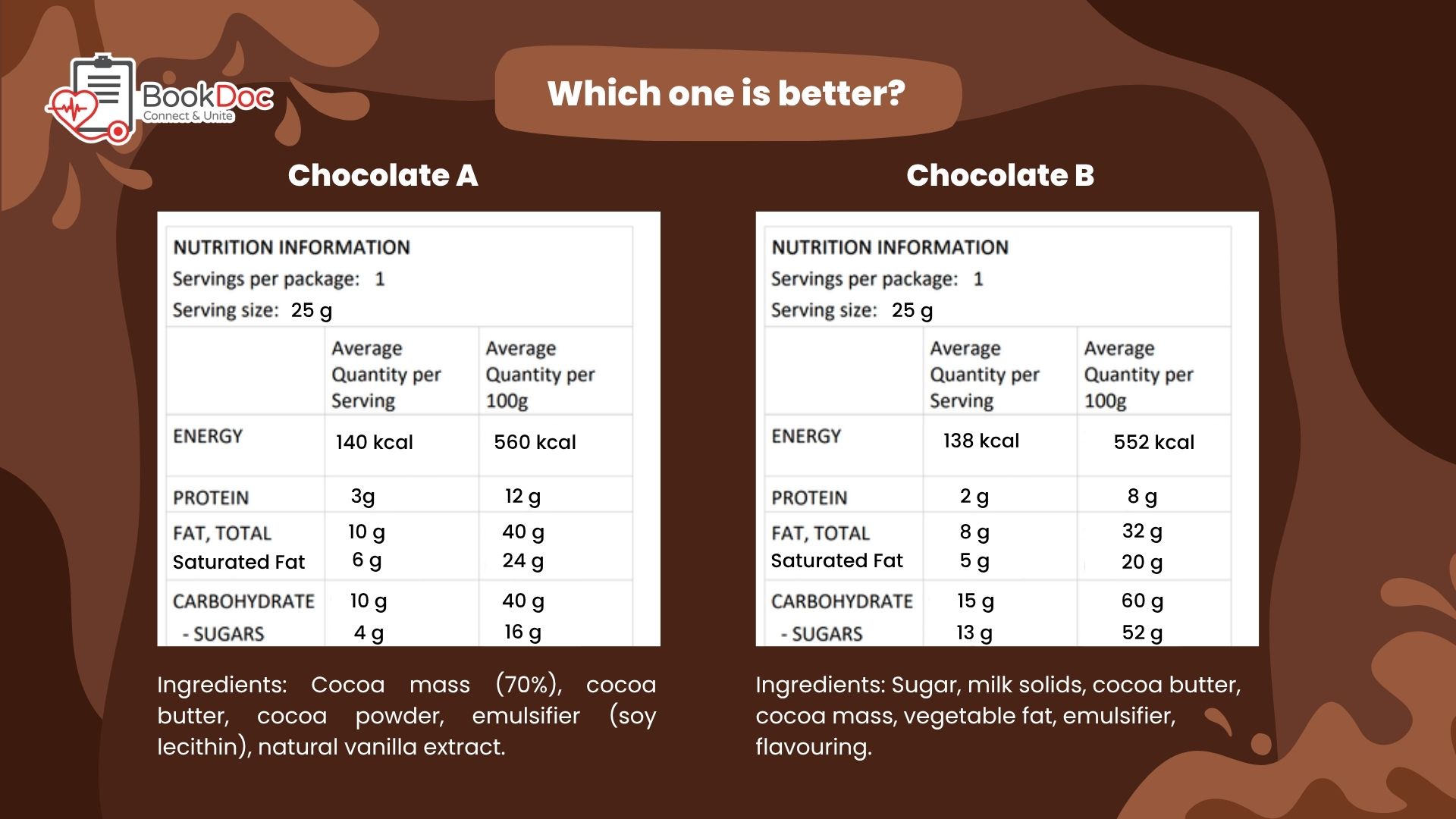
Which would you choose?
If you picked Chocolate A, great choice!
Although both products provide a similar amount of calories, Chocolate A:
- contains significantly less sugar
- lists cocoa as the first ingredient
- has a higher cocoa content (70%)
- provides more flavonoids
This shows why looking beyond calories is important. A quick glance at the ingredient list and cocoa percentage can tell you much more about the nutritional quality of your chocolate.
🛒 Become a Smarter Chocolate Shopper
The next time you’re buying chocolate, keep these simple label-reading tips in mind.
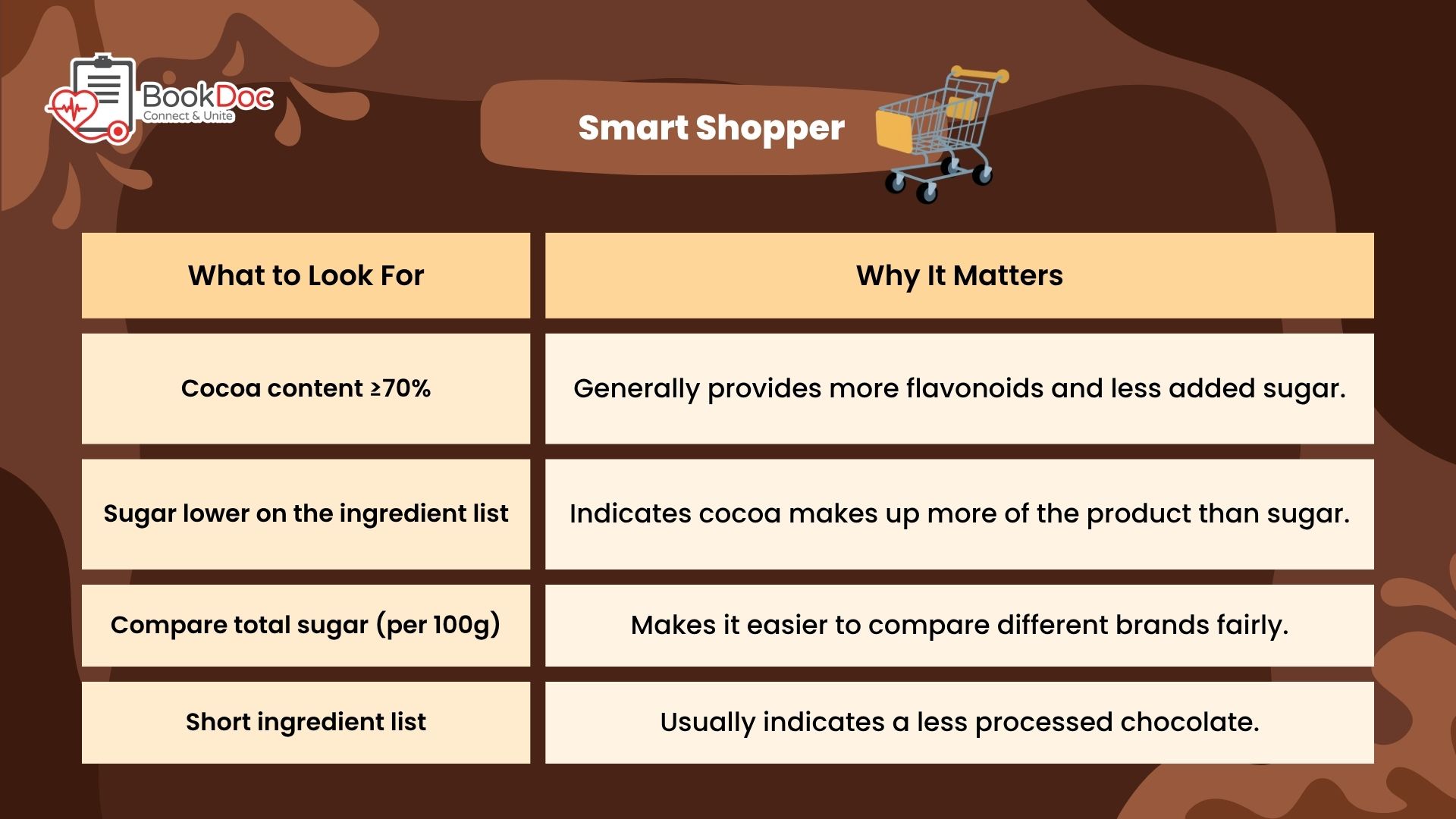
Dietitian’s Tip: Don’t be distracted by claims such as Premium, Belgian, Luxury, or Gourmet. These terms describe the product’s style or origin, not its nutritional quality. Instead, let the nutrition information panel and ingredient list guide your choice.
Enjoy It Mindfully
Even the healthiest chocolate is still a source of calories, so portion size matters.
Aim for 20–30g (about 2–3 small squares) of chocolate at a time. Eating it slowly and mindfully allows you to enjoy the flavour and satisfaction without overindulging.
🍫 A Sweet Reminder
World Chocolate Day is the perfect opportunity to celebrate one of the world’s favourite treats, but it’s also a chance to become a smarter shopper.
Healthy eating isn’t about eliminating chocolate. It’s about understanding what you’re buying, choosing options with more cocoa and less added sugar, reading food labels, and enjoying every bite in moderation.
So this July 7, unwrap your favourite chocolate, savour it mindfully, and remember sometimes the smartest choice is simply knowing what’s inside the wrapper.