





What’s on your plate today?
We think about food every day. What should I eat for breakfast? Where should I get lunch? What should I have for dinner? Yet, despite thinking about food so often, we rarely stop to think about everything behind the food on our plate.
Where did it come from? How was it produced? How did it reach us? And does everyone have access to safe and nutritious food?
Every year on 16 October, World Food Day reminds us of something we often take for granted: food. It is an opportunity to look beyond what we eat and appreciate how food connects to our health, our communities, and the world around us.
This is especially important as food waste remains a global challenge. According to the Food and Agriculture Organization (FAO), around one-third of food produced for human consumption is lost or wasted each year (1). This World Food Day, it is a good reminder that making the most of the food we have matters too.
A Little More Thought Behind Every Bite
Making the most of our food starts with being more mindful about the choices we make and how we use the food we have.
It is not about eating less or following a strict diet. Instead, it is about being more aware of the foods we choose, where our food comes from, and the effort and resources that go into producing it. It also means thinking about how our choices can affect our health, spending, and the environment.
What’s Behind Every Bite?
That meal on your plate has a story behind it.
The value of that food is not only in the nourishment it provides, but also in everything it takes to get it onto our plates. Before food reaches us, it takes water, land, energy, and human effort to grow, produce, and bring it to our tables. It may also need to be transported, stored, and packaged along the way.
This means that when edible food goes uneaten, we are not only wasting the food itself. We are also wasting the resources and effort that went into producing it. For us, it can also mean money spent on food that was never enjoyed or used.
The impact can extend beyond our homes too. When food waste is sent to landfill, it can decompose and produce methane, a greenhouse gas that contributes to climate change.
So every bite has more behind it than we might realise.
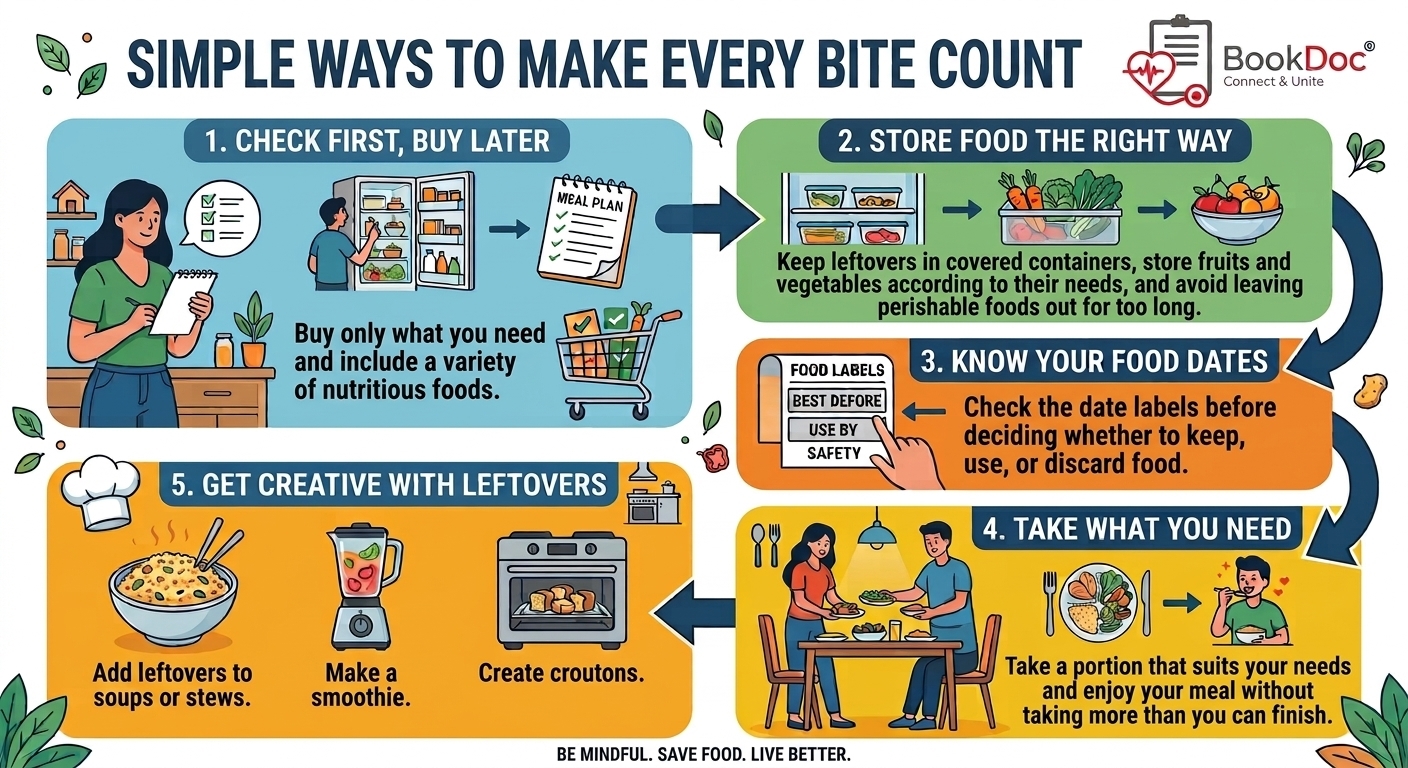
Simple Ways to Make Every Bite Count
Being mindful about food does not require major lifestyle changes. Small, consistent habits can make a meaningful difference.
It All Starts With a Bite
Every bite is more than just food on our plate. It provides nourishment, comes with resources and effort, and reflects the choices we make.
This World Food Day, let’s make those choices count. By choosing mindfully, taking what we need, and making the most of the food we have, we can support our health while reducing unnecessary waste.
Reference
1) Food and Agriculture Organization of the United Nations. (2011). Global food losses and food waste: Extent, causes and prevention. https://www.fao.org/4/mb060e/mb060e00.htm