






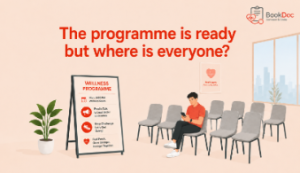
The programme is ready. But where is everyone?
The health talk is booked. The step challenge is ready. The announcement has been sent.
But when registration closes, only a small group of employees has signed up.
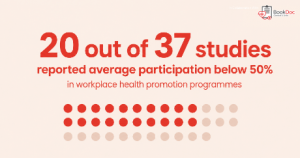
This is a common challenge. A 2023 scoping review found that, among 37 studies reporting participation rates in workplace health promotion programmes, 20 reported average participation below 50%. The review also highlighted higher participation among more health-conscious workers, raising concerns that these programmes may fail to engage some of those who need the interventions most.
For organisations, low employee participation is more than a registration issue. When only a small proportion of employees take part, a workplace wellness programme may have limited reach, making it harder to build sustained employee engagement, support employee wellbeing, and achieve meaningful health outcomes over time.
For employers, the question is not simply “What wellness activity should we offer next?”
Employers should also ask: “What would make employees want to take part, and what would make it easier for them to do so?”
Start With Employees, Not Activities
A good workplace wellness programme starts before the activity is selected.
Instead of assuming what employees want, find out what actually works for them:
- Ask about their health interests – Which health issues or activities are relevant to them?
- Consider individual factors – What lifestyle and personal factors may influence employee health?
- Consider time constraints – When can employees realistically participate without conflicting with work demands?
- Identify workplace barriers – Are workload, work demands or time constraints getting in the way?
- Learn from previous initiatives – What gaps or opportunities for improvement were identified?
How to apply: Gather employee input through an employee health survey or informal methods such as conversations and calls for input.
The CDC recommends assessing employee needs alongside the work environment and organisational practices before planning a workplace health programme. The CDC also recommends involving employees early in the process to reinforce shared responsibility and commitment.
Make Participation Easy and Worth Continuing
Even an attractive programme can struggle if participating feels difficult.
Research on workplace health promotion has identified factors such as time constraints, workload, and limited management support as barriers to participation.
So, instead of expecting employees to fit wellness around their work, consider how wellness can fit more naturally into their working day.
- Consider programme timing
Consider how programme timing can reduce conflicts with employees’ work schedules, work demands, and time constraints.
- Give employees time to participate
If wellness always competes with deadlines and workload, participation becomes harder. Allowing employees time away from their usual duties to take part may help address these barriers.
- Make management support visible
Strong management support has been identified as a facilitator of programme implementation. Managers can support participation by allowing employees time to take part and actively supporting the programme.
- Give employees a reason to stay engaged
Consider incentives and different programme components that can make participation more engaging. Research has found higher participation in programmes that offered incentives and included multiple programme components.
How to apply: Before launching the programme, ask one simple question: “Could an employee realistically participate in this during a normal working week?”
If the answer is no, the programme may need to be adjusted before another reminder email is sent.
Measure More Than Sign-Ups
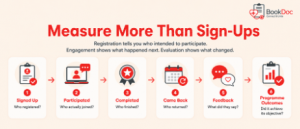
Registration numbers tell you who intended to participate.
They do not tell you the whole story.
To understand whether a workplace wellness programme is genuinely engaging employees and contributing to longer-term outcomes, look beyond sign-ups and track:
- Actual participation – How many registered employees took part?
- Completion – How many completed the activity or programme?
- Repeat engagement – Are employees coming back for the next activity?
- Employee feedback – What did they enjoy, and what made participation difficult?
- Programme outcomes – Depending on the programme objective, what changes or outcomes should be evaluated to understand whether the programme is achieving its intended purpose?
Process evaluations can help organisations understand not only whether employees registered, but also how programmes were implemented and experienced.
How to apply: Review participation, engagement, employee feedback, and programme outcomes after each initiative, and look for patterns.
These findings can help employers identify where existing programme activities can be strengthened or improved, supporting continuous improvement and programme sustainability over time.
💡 Tip: Registration shows who signed up. Looking at actual participation, engagement, and relevant outcomes provides a fuller picture of how the programme is working.
Conclusion, Better Fit, Better Participation
A workplace wellness programme does not necessarily need more activities.
It needs activities that are relevant to employees and fit the realities of their workplace.
Start by understanding employee needs. Identify barriers to participation. Support employees in taking part. Then use evaluation findings to improve future initiatives.
When programmes reflect employee needs, workplace realities, and lessons from previous initiatives, they become easier to improve and more practical for employees to take part in.
Ready to build a workplace wellness programme employees want to join?
Discover how BookDoc Corporate Wellness supports organisations with customisable wellness programmes, digital health tools, company-wide challenges, gamification, and engaging wellness events.
Written by: Sarah, Communication team