






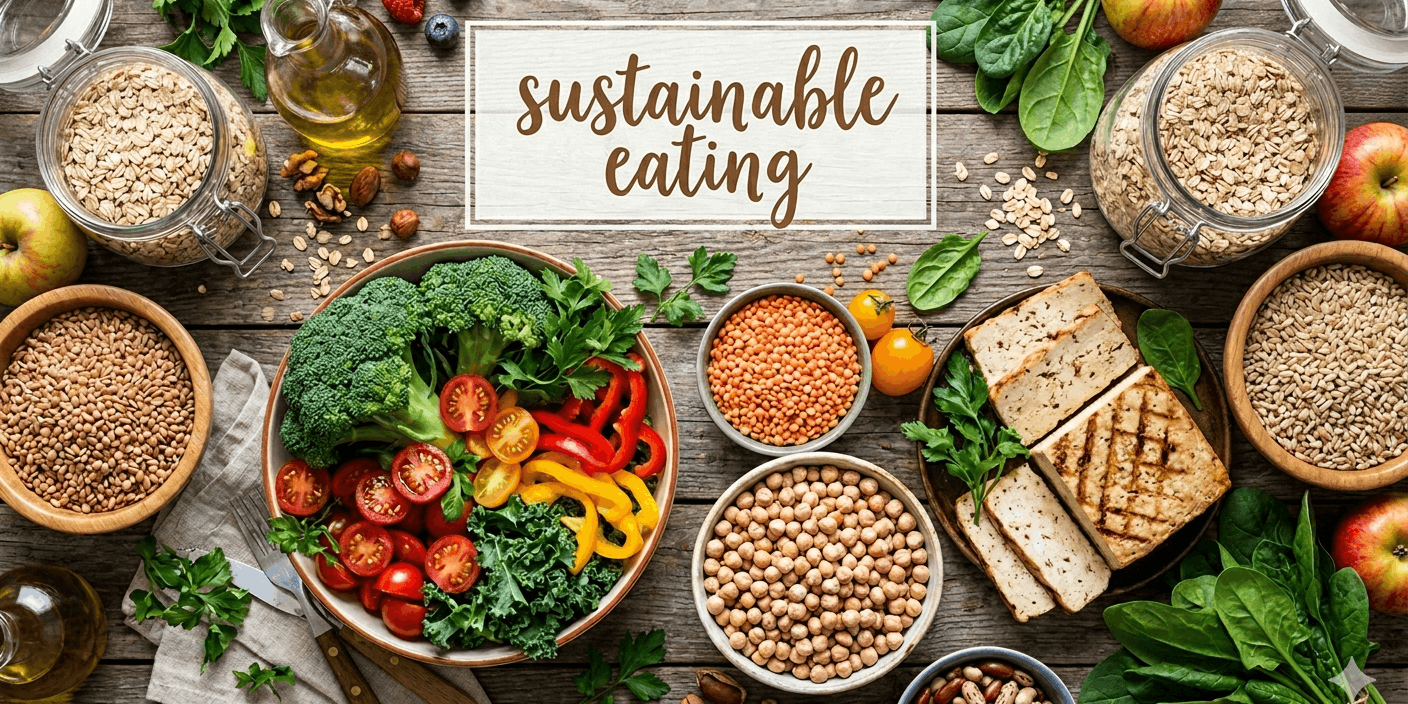
Did you know that not all foods are created equal when it comes to their impact on the planet? Some require thousands of litres of water and vast amounts of land, while others are surprisingly gentle on resources.
Because every meal leaves a footprint, the choices we make when eating can have a real effect on the environment. This is where sustainable eating comes in—making food choices that are not only good for our health but also for the planet. For example, producing 1 kg of beef may require around 15,000 litres of water, whereas 1 kg of lentils uses roughly 1,250 litres—over 12 times less water.
One of the simplest ways to eat more sustainably is by incorporating plant-forward meals. In the following sections, we’ll explore practical ways to include vegetables, legumes, and other plant-based foods so your meals can nourish both you and the planet.
Plant-Forward Meals for a Healthier You
Our health and the planet’s health are deeply connected. Diets higher in vegetables, fruits, legumes, and whole grains not only reduce environmental impact but also provide multiple benefits for your body:
Fiber from vegetables and fruits – Supports healthy digestion, regular bowel movements, and a balanced gut microbiome. For example you can get fiber from vegetables such as broccoli, carrots, and spinach, and fruits, such as apples and oranges.
Legumes, tofu, tempeh, chickpeas, beans, lentils, and nuts are high in protein while having a lower environmental footprint than animal protein, such as red meat.
Wholegrain carbs such as brown rice, oats, wholemeal bread, or barley. They provide steady energy and more nutrients than refined grains. Also, they contain soluble fibers, potassium, magnesium, folate, and antioxidants which are good for heart health. You can obtain these nutrients from colourful vegetables such as bell peppers, tomatoes, and leafy greens, and also from fruits like oranges, berries, and kiwis.
By eating in a way that’s good for the planet, we’re also investing in long-term personal health. Sustainable eating isn’t a sacrifice — it’s a win-win for both you and the environment.
Simple Steps to Eat Sustainably.
Fortunately, sustainable eating doesn’t have to be complicated. You can start small, with realistic steps that fit naturally into your daily routine. Eating sustainably is also about reducing food waste, planning meals thoughtfully, and balancing what’s on your plate. Even adopting one or two of these habits consistently can make a tangible difference — for your health, your community, and the planet.
- Include more plant-forward meals—such as tofu, tempeh, beans, lentils, and extra vegetables. For example, having granola with plant milk (such as oat milk, soy milk, almond milk, etc.) for breakfast, stir-fried tempeh with potatoes for lunch, and steamed tofu with stir-fried vegetables for dinner are simple, practical ways to get started.
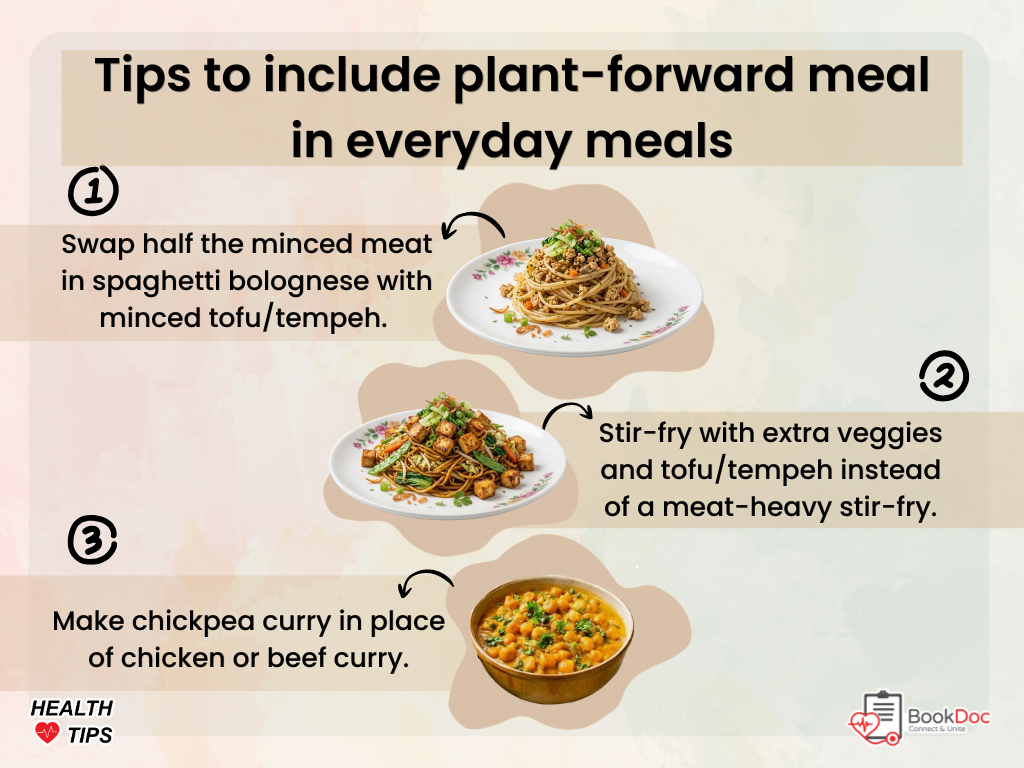
- Choose one plant-based meal day each week—like Meatless Monday, a global initiative that promotes better health and lower environmental impact by encouraging people to skip meat every Monday. Even this small change can make a difference—doing so for a year is roughly equivalent to not driving your car for about 40 days in terms of CO₂ emissions.
- Plan meals and groceries – A weekly menu and shopping list help avoid overbuying and minimize food waste, which directly supports sustainable eating.
- Eat balanced portions – Eating appropriate portions prevents overeating and reduces plate waste. The Suku-Suku Separuh concept makes it easy to enjoy meals that are both nutritious and environmentally friendly. The image below illustrates how to apply this concept at every meal.

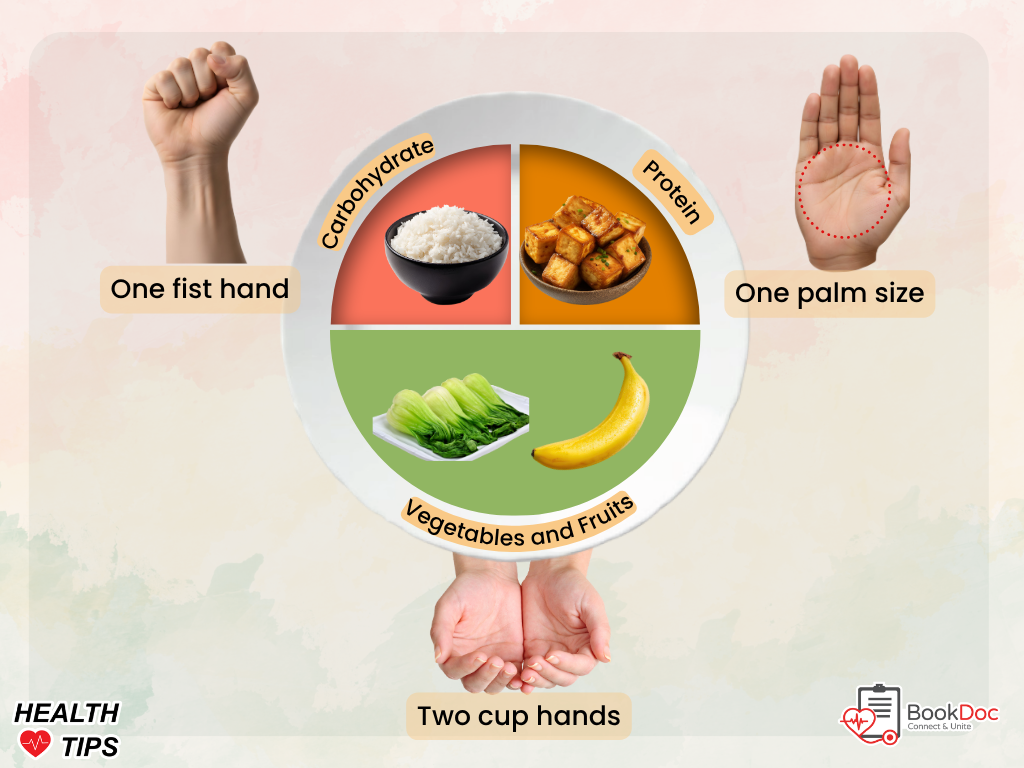
Suku-Suku Separuh for Sustainability
And when we talk about Suku- Suku Separuh, it is always about:
- P : Portion – Eat moderate portions and prioritize vegetables on your plate to lower your environmental footprint. Use the hand portion guide shown above to help you visualize the right amounts.
- C : Cooking Method – Choose methods that use less or no oil. Reducing oil use lowers the resources and energy needed to produce and cook meals, helping make your meals more sustainable.
- B : Balance – Include all food groups to meet nutritional needs while favouring plant-forward options to lower the carbon footprint of your meals.
- V : Variety – Mix things up! Eating a variety of foods gives you different nutrients and keeps meals fun and interesting. It also stops you from relying too much on just one type of food, which might not give your body everything it needs.
Your Plate, Your Planet: Take Action Today
This World Earth Day, remember that every meal is a chance to nourish yourself and the planet. Small, mindful choices can make a meaningful difference over time. Sustainable eating isn’t about perfection, but about consistent, practical actions that benefit your health, support your community, and protect the environment.