







Sweet, juicy, and refreshing, watermelon is one of the most popular fruits in Malaysia. Whether enjoyed as a snack, dessert, or juice, it is a favourite way to cool down in Malaysia’s tropical climate. It is also widely available and affordable. Watermelon provides hydration and contains nutrients such as vitamin C, potassium, and antioxidants like lycopene, while also contributing dietary fibre (1).
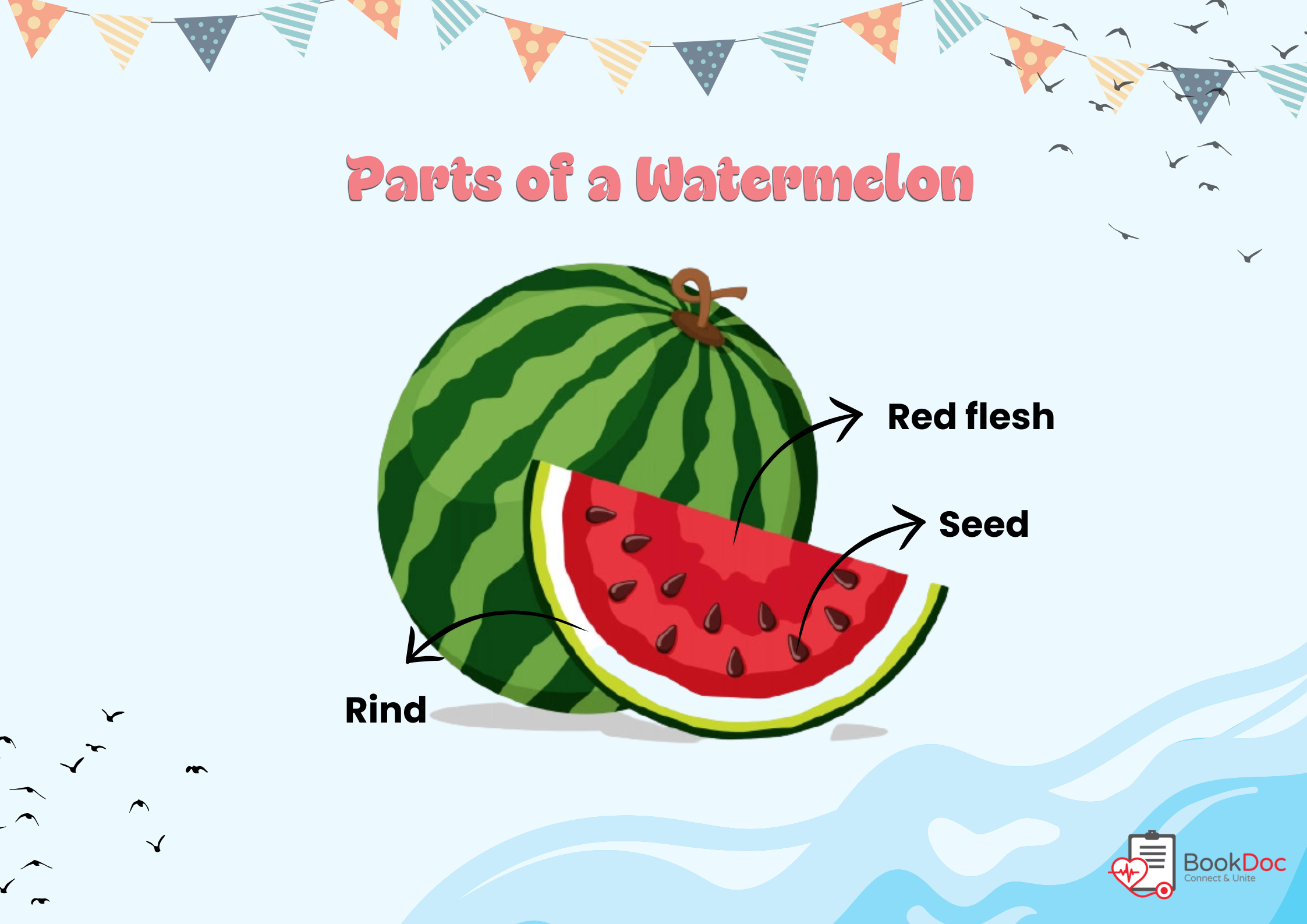
To celebrate National Watermelon Day, let’s explore how we can make the most of this fruit. While the juicy red flesh is the most commonly enjoyed part, other parts of the fruit are often overlooked.
Looking Beyond the Red Flesh
 A Nutritional Boost from the Rind
 A Nutritional Boost from the Rind
Compared with the red flesh, the rind generally contains more dietary fibre, which may help contribute to daily fibre intake among Malaysians (1). Fibre supports digestive health by promoting regular bowel movements, supporting healthy blood cholesterol levels and blood glucose management, while also contributing to fullness after meals.
Despite these benefits, the rind is often overlooked because it is less sweet and has a firmer texture compared with the juicy red flesh. However, with a little creativity, the rind can be transformed into different dishes, offering a new way to enjoy more of the watermelon. Stay tuned for some creative recipe ideas later.
What About the Seeds?
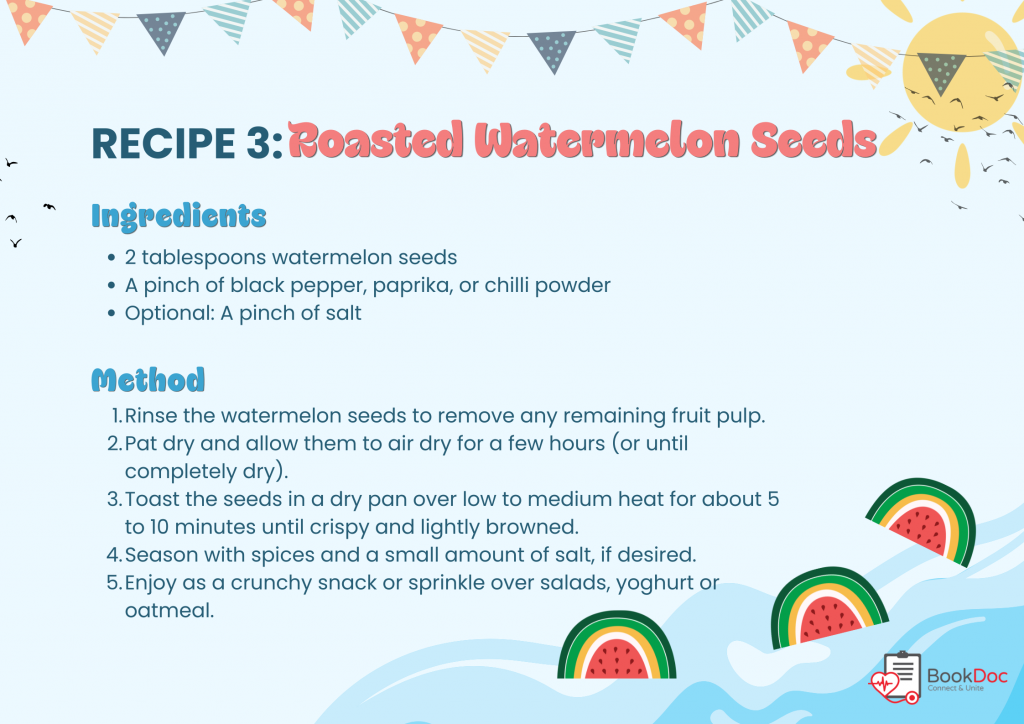
While watermelon seeds are commonly removed and discarded, they are also edible. They contain nutrients such as plant-based protein, healthy fats, and minerals including magnesium and folate (1). For better enjoyment and nutrient availability, watermelon seeds can be chewed thoroughly or roasted before consumption. Roasting the seeds can improve their texture, making them a crunchy addition to snacks, salads, or homemade trail mixes.
Similar to other seeds, watermelon seeds can be enjoyed in small portions as part of a balanced diet. A small handful can be used as a topping for meals or enjoyed as a snack.
A Sustainable Way to Enjoy Watermelon
Using more edible parts of watermelon, including the rind and seeds, is a simple way to reduce household food waste. By making use of parts that are often discarded, we can maximise the value of the food we purchase while discovering new ways to enjoy this fruit.
Think Beyond the Red Flesh: Creative Recipes
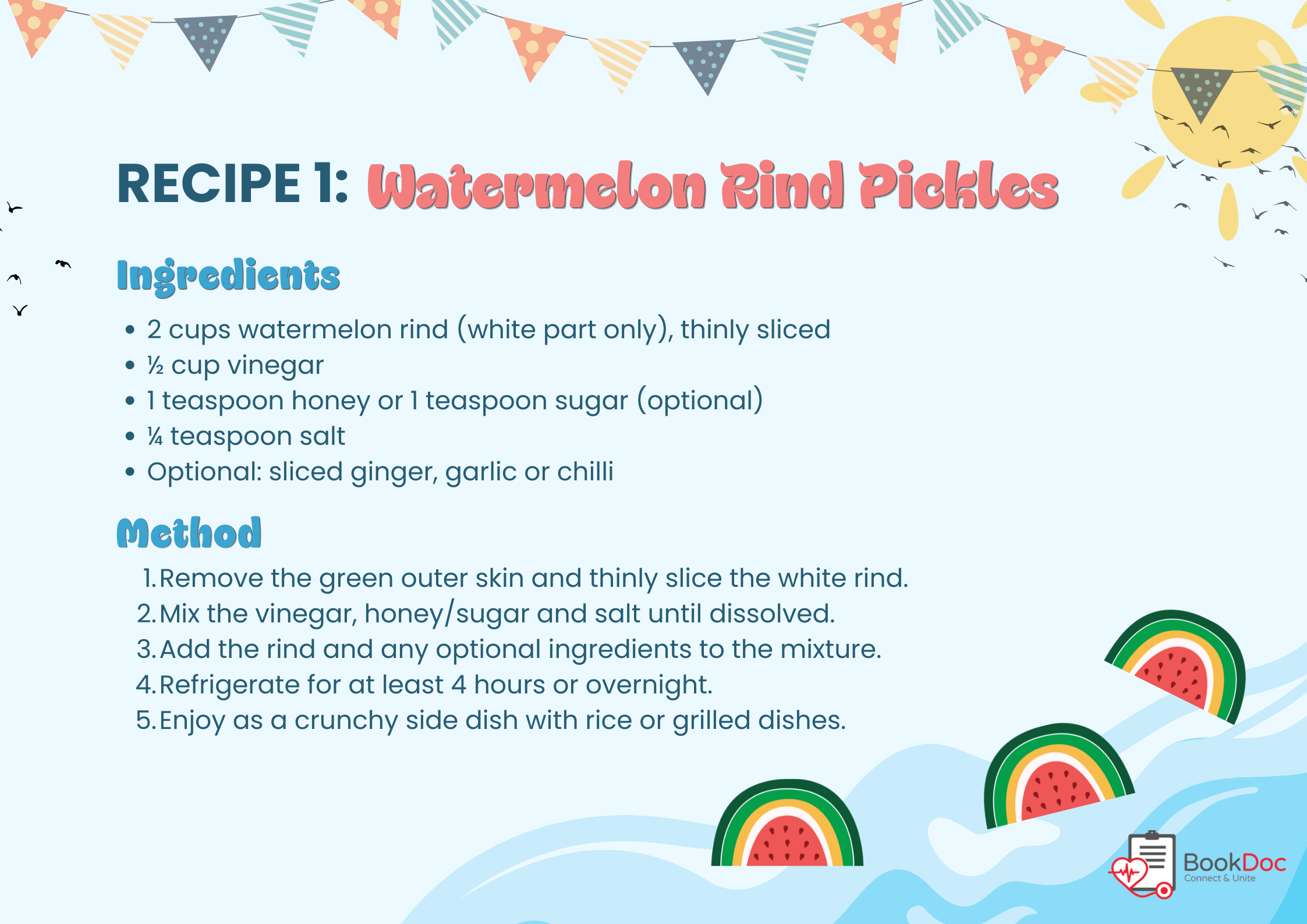
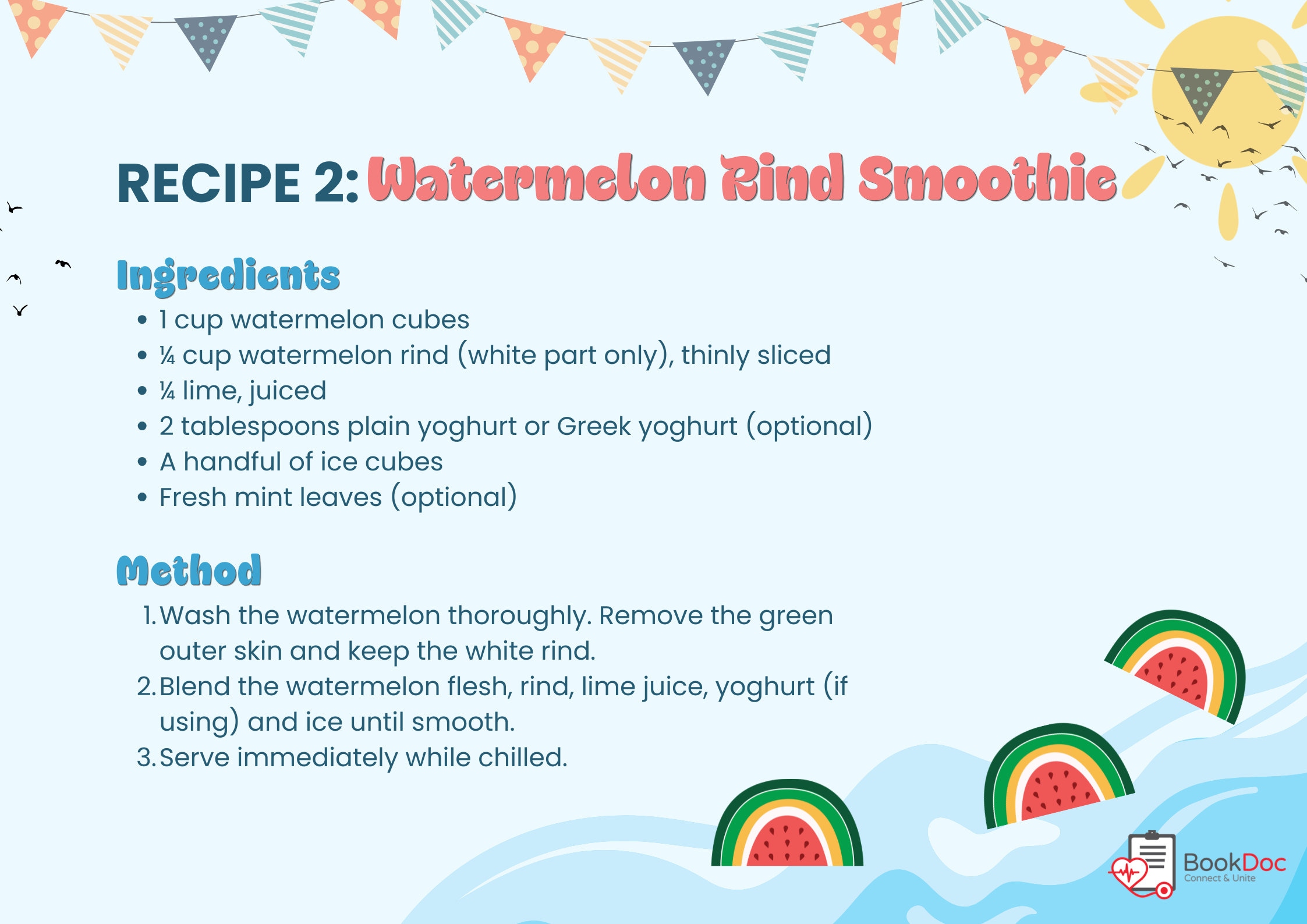
The white rind has a mild flavour and crisp texture, allowing it to absorb flavours easily. Watermelon seeds can be roasted and enjoyed as a crunchy topping or snack. Here are some simple recipe ideas:
The Bottom Line
Watermelon offers more than just its juicy red flesh, which provides vitamins, minerals, and antioxidants. The often-overlooked white rind provides additional fibre, while the seeds contribute healthy fats, protein, and minerals that can complement a balanced diet. The next time you cut a watermelon, consider keeping the rind and seeds. With a little creativity, you can enjoy more of the fruit, reduce food waste, and discover new ways to enjoy this familiar fruit. Happy National Watermelon Day!
Reference:
1) https://health.clevelandclinic.org/benefits-of-watermelon