







When Workplace Stress Becomes More Than Just a Personal Challenge
Meetings continue. Deadlines pile up. Pressure builds.
Behind completed tasks and daily achievements, workplace stress is not always visible. In Employment Hero’s 2024 Wellness at Work Report, a survey of 1,015 Malaysian employees found that 67% had felt burnt out due to work in the previous three months.
The impact is not only personal. Poor mental health in the workplace was estimated to have cost Malaysian employers RM14.46 billion, equivalent to about 1% of Malaysia’s economic output, due to absenteeism, presenteeism and staff turnover.
While mental health is often viewed as a personal concern, workplaces play an important role in creating environments where employees feel valued, supported and comfortable seeking help.
For employers, supporting mental wellbeing goes beyond organising occasional wellness activities. It requires building a workplace culture where employee wellbeing is recognised as an important part of organisational success.
A supportive workplace culture is not built through a single campaign. It develops through consistent efforts that encourage awareness, accessibility and meaningful support.
Why Employee Mental Wellbeing Matters to Organisations
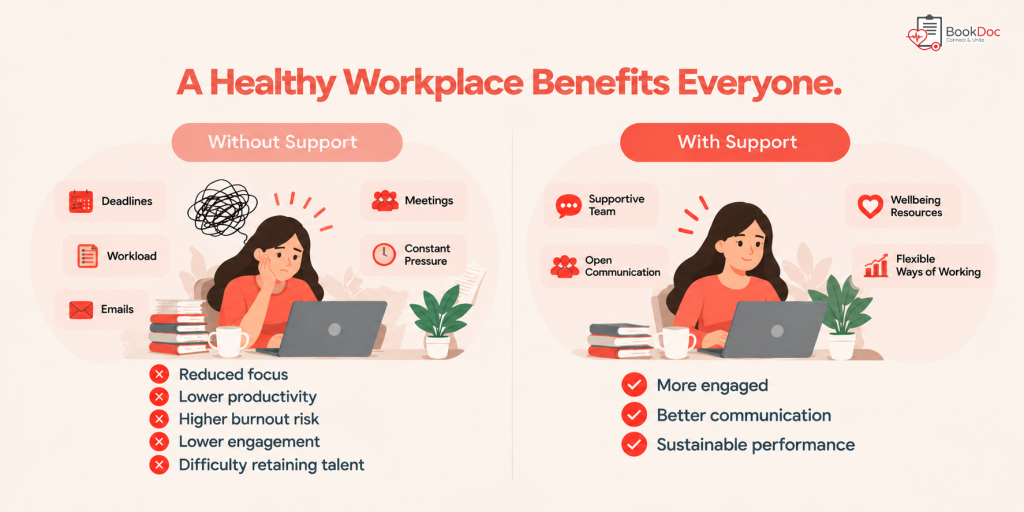
A supportive workplace benefits both employees and organisations.
When employees feel supported, they are more likely to stay engaged, communicate effectively and maintain sustainable performance.
However, prolonged workplace stress without proper support may contribute to challenges such as:
- Reduced focus and productivity
- Increased absenteeism
- Higher risk of burnout
- Lower employee engagement
- Difficulty retaining talent
Instead of only asking:
“How can we help employees manage stress?”
Organisations should also consider:
“What can we improve within our workplace to create healthier ways of working?”
Supporting employee wellbeing is not only about improving performance. It is about creating a workplace where people feel supported, valued and able to do their best over time.
How Organisations Can Build Mental Wellbeing Into Workplace Culture
Mental wellbeing initiatives are most effective when they become part of everyday workplace practices rather than a one-time campaign.
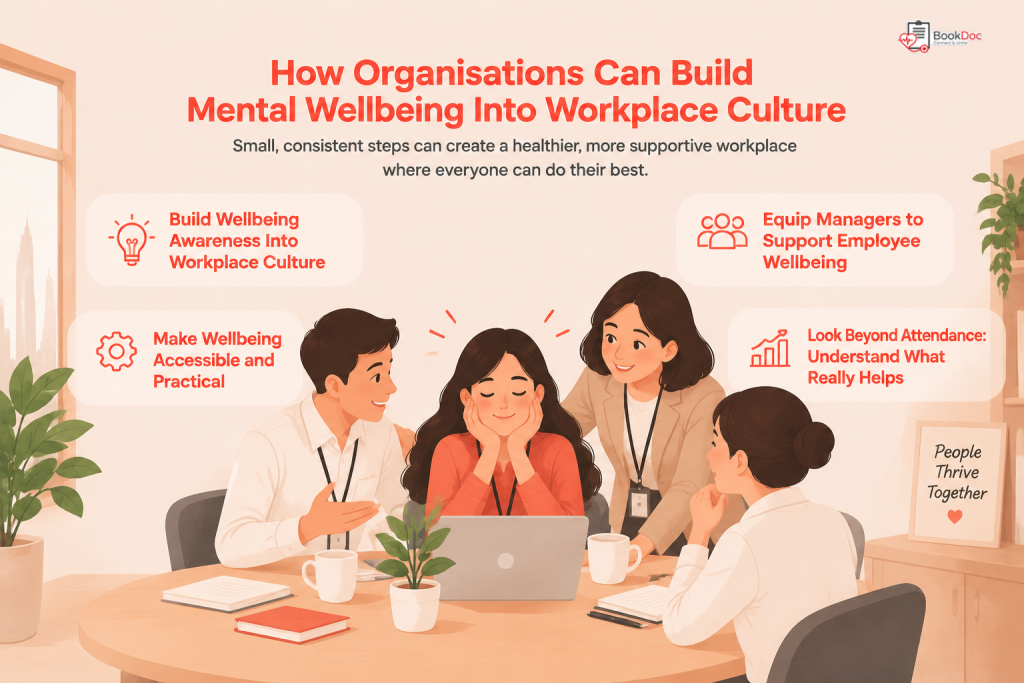
Build Wellbeing Awareness Into Workplace Culture
Employees may experience stress or emotional challenges but hesitate to seek support due to stigma or lack of awareness.
Employers can encourage healthier conversations by:
- Providing mental health awareness sessions
- Offering stress management resources
- Encouraging open conversations
- Improving mental health literacy
The World Health Organization (WHO) highlights that workplace mental health support includes increasing awareness and equipping managers with the skills to recognise and respond to employee wellbeing challenges.
Mental health awareness helps employees recognise when they may need support and understand available resources.
Simple ways organisations can start:
- Mental health education sessions
- Employee wellbeing resources
- Regular communication on available support
Equip Managers to Support Employee Wellbeing
Managers influence employees’ daily work experiences.
Building a supportive workplace culture does not happen overnight. It starts with small, consistent efforts that help employees feel heard, supported and comfortable seeking help.
Employers can support managers through:
- Mental health training
- Communication skills development
- Guidance on supporting employees facing challenges
- Regular wellbeing check-ins
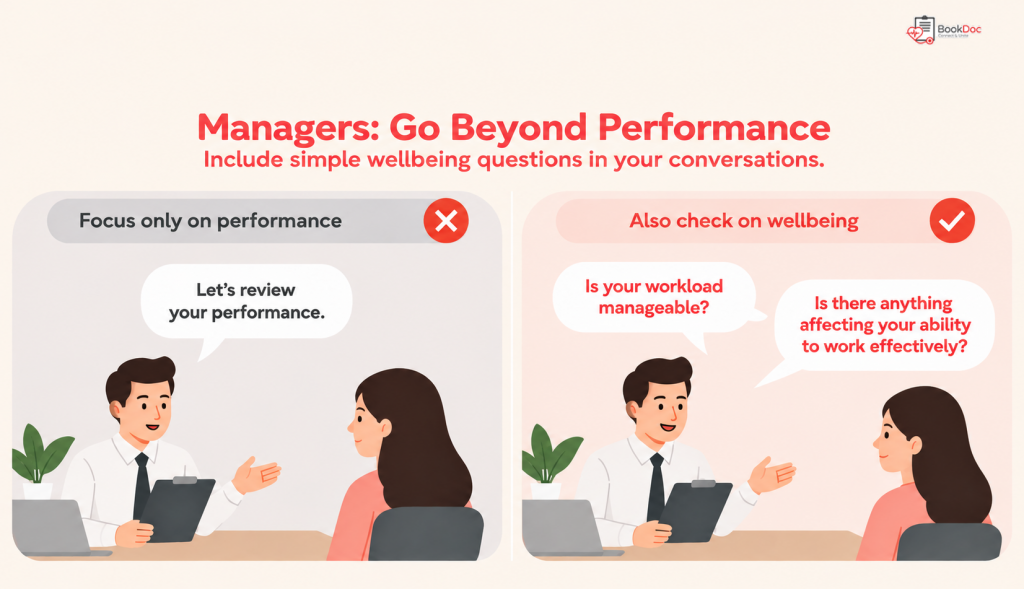
Instead of focusing only on performance discussions, managers can include simple wellbeing questions:
“Is your workload manageable?”
“Is there anything affecting your ability to work effectively?”
Make Wellbeing Accessible and Practical
A workplace wellbeing programme should fit employees’ daily routines, not become another responsibility they struggle to manage.
Employers can improve engagement by considering:
- Flexible programme timing
- Short and accessible activities
- Digital wellbeing tools
- Employee feedback before planning initiatives
Before introducing a programme, employers should understand employee needs through:
- Wellbeing surveys
- Feedback sessions
- Informal discussion
Look Beyond Attendance: Understand What Really Helps Employees
A successful mental health initiative is not only about how many people join. It is also about whether employees feel supported and whether the initiative creates meaningful change.
Employers should also evaluate:
- Employee feedback
- Programme engagement
- Changes in wellbeing awareness
- Workplace challenges identified
- Opportunities for improvement
Measuring outcomes helps organisations understand what works and where improvements can be made.
Conclusion: A Healthier Workplace Starts With Mental Health Support
Supporting employee wellbeing requires more than providing resources. It requires building a workplace culture where wellbeing is recognised as an important part of organisational success.
By increasing mental health awareness, empowering managers and providing accessible wellness solutions, organisations can create healthier environments where employees feel supported and able to thrive.
At BookDoc, we support organisations in creating healthier workplaces through our corporate wellness offerings, including customised wellness programmes, digital health solutions, mental health initiatives and engaging employee experiences designed to foster a healthier and more supportive work environment.
Ready to strengthen employee wellbeing in your organisation? Explore how we can support your workplace wellbeing journey today!
Written by: Sarah, BookDoc Team
References
Centers for Disease Control and Prevention. (2024). Workplace Health Model: Building a Workplace Health Program. National Center for Chronic Disease Prevention and Health Promotion.
Chua, S. N. (2020). Workplace Mental Health: The Business Costs. Relate Mental Health Malaysia.
Employment Hero. (2024). The 2024 Wellness at Work Report: Malaysia.
World Health Organization. (2022). WHO Guidelines on Mental Health at Work. World Health Organization.
World Health Organization. (2024). Mental Health at Work. World Health Organization.
World Health Organization & International Labour Organization. (2022). Mental Health at Work: Policy Brief. World Health Organization.