






This International Men’s Day, themed “The Future is Everyone,” we are reminded that building a healthier and more sustainable future begins with promoting the well-being of men in workplaces and communities. It is a time to recognise men’s contributions and ensure they have the support they need to thrive. True strength is not about pushing through exhaustion, but also about taking care of your body and mind through proper nutrition and healthy lifestyle choices.
In today’s busy work environment, maintaining healthy eating habits can be challenging as work commitments often take priority. However, good nutrition is essential for maintaining energy, supporting overall health, and keeping the body functioning well. A study showed that men tend to omit proper nutrition more than women 2. So, what are the common workplace challenges that can affect men’s eating habits?
The Desk Job Trap and Challenges for Proper Nutrition
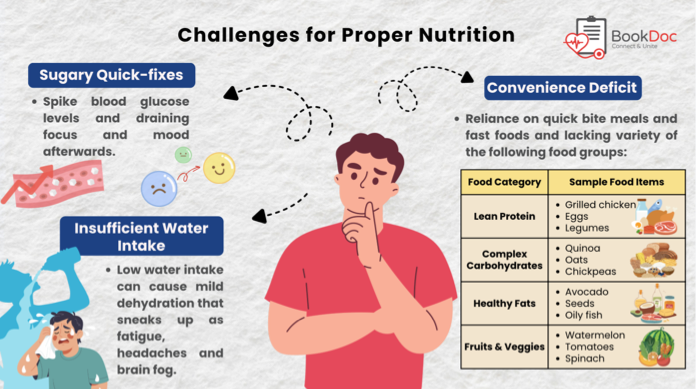
Before we can build better eating habits, it is important to identify the everyday traps encountered by modern office culture. Long periods of sitting, paired with high-stress work environments, directly cause poor health choices. A problem of lack of proper nutrition was found to reduce efficiency at work up to 66% 5, 6.
- Sugary Quick Fixes: Carbohydrate-rich foods and energy drinks provide a quick increase in blood sugar levels but are followed soon by a rapid energy loss.
- Convenience Deficit: Long working days and tight deadlines leave no choice but to eat fast, but then balanced meals, combining proteins, fats, and carbohydrates with fruits and veggies become impossible to consume.
- Dehydration: Busy schedules result in a lack of water intake and its consequences, such as dehydration and headaches.
The Nutrients that Matter for Working Men
Understanding the daily obstacles allows us to fight back with targeted nutrition. Since increased periods of sitting at work and increased stress levels associated with work may affect the heart, metabolism, and hormones in general, a proper diet that emphasises these nutrients can be very beneficial:
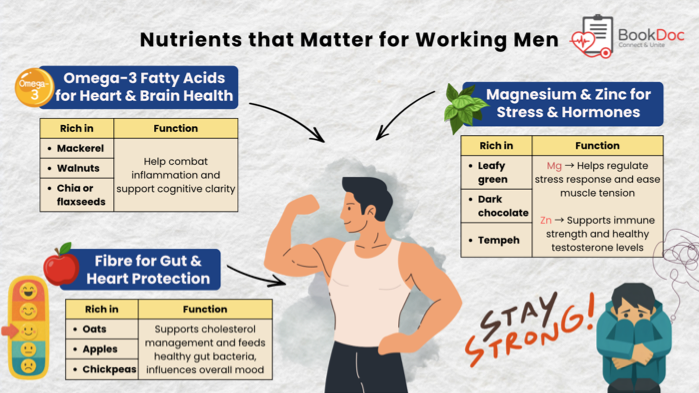
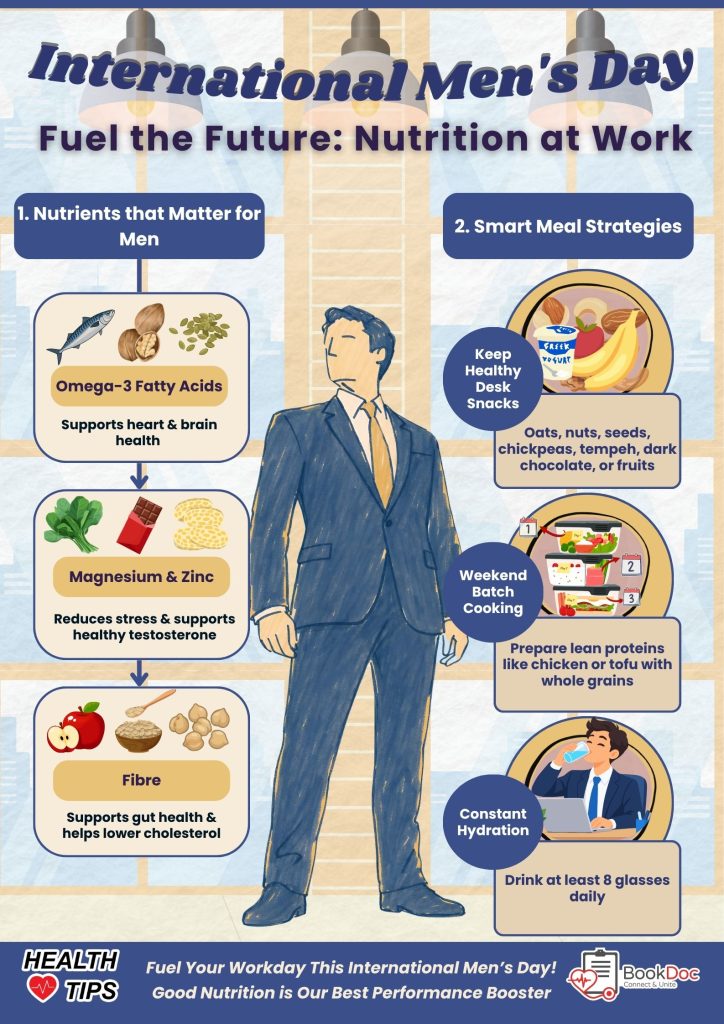
- Omega-3 Fatty Acids for Heart and Brain Functioning: Omega-3s (specifically EPA and DHA) help reduce inflammation in the body while building healthy outer layers of the brain cells. Thus, this helps men keep a sharp, clear mind under stress and keeps blood fat levels within a healthy range 1.
- Magnesium and Zinc for Stress Reduction and Steroid Production: Magnesium helps to reset the body’s main stress system, keeping stress hormone levels under control 7; while zinc is necessary to power up immune response and acts as a key building block for healthy testosterone levels 3.
- Fiber for Gut and Heart Health: Soluble fiber acts like a sponge in the digestive tract, and it soaks up excess cholesterol so that the body can flush it out before entering the bloodstream. It also feeds beneficial gut bacteria to produce signals that stabilise blood sugar and help regulate mood 4.
Smart Meal Strategies for Demanding Schedules
Knowing which nutrients our body needs is only halfway there; implementing them into our dietary routine is where real change happens. When time is not adequate, convenience wins. Following certain tips will help us maintain healthy eating habits without feeling additional stress:
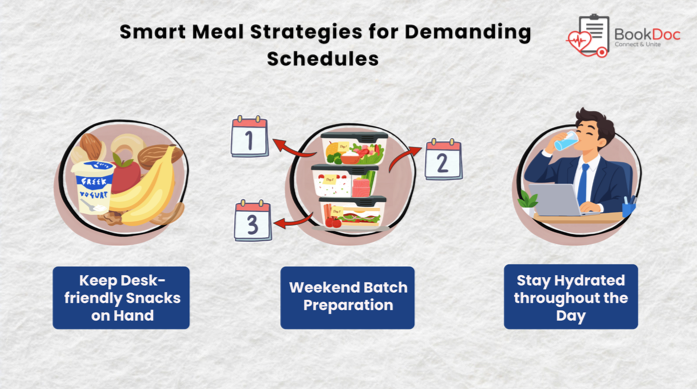
- Keep Healthy Desk Snacks: Instead of reaching for unhealthy food from sugary snacks and fast foods, opt for high-fibre oats, walnuts, seeds, chickpeas, tempeh, dark chocolate, or fresh fruits handy at the desk or in the office refrigerator. These options can help to meet daily nutritional needs while keeping hunger at bay between meals.
- Weekend Batch Cooking: Outsmart unhealthy quick meals by preparing larger portions of low-fat protein such as chicken breast, tofu, peas, or shrimp, and whole grains on weekends will help us have ready meals all through the busy working week.
- Constant Hydration: Keeping a large water bottle directly on our desk, setting calendar reminders to drink water, and ensuring we consume at least 8 glasses of water throughout the whole day.
Redefining Workplace Strength
Ultimately, success at work should not come at the cost of personal well-being. Taking charge of your nutrition, scheduling routine health checkups, and recognising when your body needs rest are clear demonstrations of self-care and resilience. Treating your body with the right fuel is an investment in your career, longevity, and overall quality of life. Remember, Fuel Your Workday This International Men’s Day! Good Nutrition is Our Best Performance Booster and Helps build a Better Future!
Dietitian Intern, Chan Zi Jian
References
- Bornfeldt, K. E. (2021). Triglyceride lowering by omega-3 fatty acids: A mechanism mediated by N-acyl taurines. The Journal of Clinical Investigation, 131(6), Article e147558. https://doi.org/10.1172/JCI147558
- Escoto, K. H., Laska, M. N., Larson, N., Neumark-Sztainer, D., & Hannan, P. J. (2012). Work hours and perceived time barriers to healthful eating among young adults. American Journal of Health Behavior, 36(6), 786–796.https://pmc.ncbi.nlm.nih.gov/articles/PMC3464955/
- Fallah, A., Mohammad-Hasani, A., & Colagar, A. H. (2018). Zinc is an essential element for male fertility: A review of Zn roles in men’s health, germination, sperm quality, and fertilization. Journal of Reproduction & Infertility, 19(2), 69–81.https://pmc.ncbi.nlm.nih.gov/articles/PMC6010824/
- Ghavami, A., Ziaei, R., Talebi, S., Barghchi, H., Nattagh-Eshtivani, E., Moradi, S., Rahbarinejad, P., Mohammadi, H.,Ghasemi-Tehrani, H., Marx, W., & Askari, G. (2023). Soluble fiber supplementation and serum lipid profile: A systematic review and dose-response meta-analysis of randomized controlled trials. Advances in Nutrition, 14(3), 465–474.https://doi.org/10.1016/j.advnut.2023.01.005
- HSE Network. (2026). Fuel wellbeing and performance with better workplace nutrition. https://www.hse-network.com/fuel-wellbeing-and-performance-with-better-workplace-nutrition/
- International Labour Organization. (2005). Poor workplace nutrition hits workers’ health and productivity, says new ILO report. https://www.ilo.org/resource/news/poor-workplace-nutrition-hits-workers-health-and-productivity-says-new-ilo
- Sartori, S. B., Whittle, N., Hetzenauer, A., & Singewald, N. (2012). Magnesium deficiency induces anxiety and HPA axis dysregulation: Modulation by therapeutic drug treatment. Neuropharmacology, 62(1), 304–312.https://doi.org/10.1016/j.neuropharm.2011.07.027